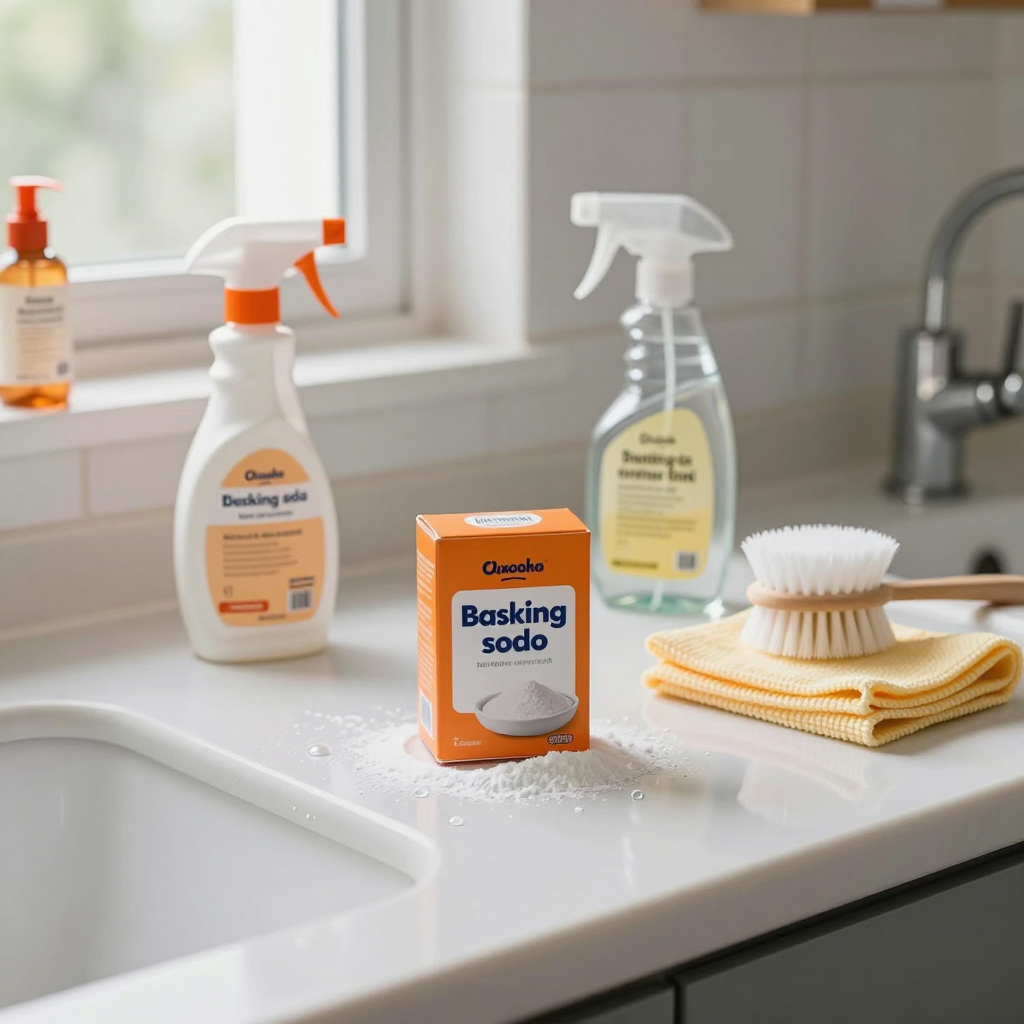
Cleaning gets expensive when every room seems to need its own spray, wipe, refill, and specialty bottle.
What usually works better in practice is a much smaller routine built around a few basic products that handle everyday cleaning well enough to keep the house manageable. Baking soda is one of the most useful of those basics. Combined with white vinegar, dish soap, hot water, and a cloth or sponge, it can cover a surprising number of routine cleaning jobs.
This is not a miracle-cleaning system, and it will not replace every product in your home. But it can reduce how many single-purpose cleaners you keep buying, which is where a lot of household spending quietly builds up.
⚠️ Costs below are based on common U.S. store-brand pricing and will vary by region. Always test DIY cleaning methods on a small hidden area first, especially on delicate surfaces.
Why Pantry-Item Cleaning Can Save Money
The savings here usually come from replacing or reducing a few repeat purchases, not from creating a totally homemade house-cleaning system.
A practical pantry-based cleaning setup works because it:
- handles common light cleaning jobs
- reduces the need for multiple specialty products
- makes maintenance easier and more repeatable
- uses ingredients that are already inexpensive and easy to find
In practice, baking soda works best as a light scrubber and deodorizer, not as an all-purpose solution for everything.
A Simple Cleaning Kit That Covers Most Jobs
You do not need much to make this system work:
- Baking soda — about $1–2
- White vinegar — about $2–3
- Dish soap — already in most kitchens
- Microfiber cloths or old rags — often already on hand
- Scrub brush or sponge — a few dollars
Quick Cost Comparison
| Item | Typical cost | Main use |
|---|---|---|
| Baking soda | $1–2 | Scrubbing, odor control |
| White vinegar | $2–3 | Light cleaning, deodorizing |
| Dish soap | $2–4 | Grease cutting, wipe-downs |
| Microfiber cloths / rags | $0–8 | Reusable cleaning |
| Scrub brush / sponge | $2–5 | Surface cleaning |
This is often enough for routine maintenance cleaning in kitchens, bathrooms, laundry areas, and other high-use spaces.
What Baking Soda Does Well
Baking soda works well for:
- light sink and tub scrubbing
- odor control in fridges, trash cans, and closets
- spot cleaning on stovetops
- simple maintenance cleaning
- helping loosen light buildup
It works less well for:
- heavy disinfecting
- serious mold or mildew
- deep mineral buildup
- specialty surfaces that need specific care
- every cleaning task in the house
That distinction matters. A frugal cleaning method only saves money if it is used for the right jobs.
Practical Ways to Use It
Kitchen Sink Scrub
Sprinkle baking soda into a damp sink and scrub with a sponge or cloth.
Best for: light buildup and odor
Time: about 5 minutes
Refrigerator Deodorizer
Keep an open box or small bowl of baking soda in the fridge and replace it every few months.
Best for: ongoing odor control
Tub or Sink Paste
Mix baking soda with a small amount of water into a paste and apply it to soap scum or light staining. Scrub gently and rinse.
Best for: maintenance, not heavy buildup
Trash Can Freshener
Sprinkle a thin layer of baking soda in the bottom of the can before replacing the bag.
Best for: everyday odor reduction
Stovetop Spot Cleaning
Use baking soda with a damp cloth to loosen light splatter and dried spots before they become a bigger mess.
Best for: regular upkeep
Shoe or Closet Freshening
Place a small container of baking soda in stale-smelling areas and replace it as needed.
Best for: small enclosed spaces
What Worked Best in Practice
The pantry-cleaning habits that usually worked best were the simplest ones:
- sink scrubbing once or twice a week
- keeping baking soda in the fridge
- using a quick paste for light bathroom buildup
- wiping small messes before they turned into bigger ones
The main benefit was not dramatic deep cleaning. It was preventing small messes from reaching the point where stronger or more expensive products were needed.
A Realistic Weekly Cleaning Routine
A low-cost cleaning system works best when it is short and repeatable.
Kitchen
- wipe surfaces with dish soap and hot water
- scrub the sink with baking soda if needed
- wipe stovetop splatters before they harden
Bathroom
- use baking soda paste for light sink or tub buildup
- wipe mirrors and fixtures with a cloth
- focus on maintenance, not deep-clean perfection
Trash and Odor Control
- replace the bag
- add baking soda if odor is a problem
Laundry / Utility Area
- wipe visible dust
- check for stale smells or dampness
- keep it at maintenance level
Refrigerator Check
- toss anything clearly unusable
- wipe small spills
- replace deodorizing baking soda when needed
This kind of routine usually takes less time than a full deep clean and helps keep the home from sliding into “catch-up mode.”
When Specialty Products Still Make Sense
There are still situations where a specific cleaner is the right choice:
- mold or mildew treatment
- disinfecting after illness
- delicate surfaces like marble or specialty finishes
- heavy buildup that has been ignored for a long time
- manufacturer-recommended product use
Frugality works better when it is honest. The goal is not to force baking soda into every cleaning problem. The goal is to reduce unnecessary product buying.
What Didn’t Work as Well
A few patterns usually undermined the savings:
- using too many DIY ingredients at once
- expecting deep-clean results from a maintenance product
- buying specialty cleaners anyway “just in case”
- turning cleaning into a complicated project instead of a routine
The strongest low-cost systems are usually boring and simple.
Budget Impact Over Time
The direct monthly savings from using baking soda and pantry staples are often modest, but real.
For many households, cutting back on a few specialty cleaners might save roughly $3–8 per month, depending on what they were buying before. That may not sound dramatic, but it adds up over time and usually comes with less clutter under the sink.
In practice, the bigger benefit is often behavioral: once you stop assuming every small mess needs its own product, shopping gets simpler across the whole household.
Why This Helps the Rest of the Budget
A reasonably clean, manageable home makes other low-cost habits easier.
When the kitchen is under control:
- cooking at home feels easier
- food gets used more consistently
- the house feels less chaotic
- convenience spending becomes less tempting
That is why this kind of routine fits naturally alongside Pantry Meals When You’re Broke and low-cost household reset habits.
Keep Going
If you want to simplify more of the home side of your budget, the Frugal Home category archive is the next place to look. This also pairs well with Weekly Home Reset Routine on a Budget if your main goal is keeping the house manageable without adding cost or complexity.
FAQ
Can baking soda replace every cleaner in my home?
No. It works best as a light scrubber and deodorizer, not as a complete replacement for every product.
Is DIY pantry cleaning worth the effort?
Yes, when the methods are simple enough to repeat and actually replace something you would otherwise buy.
Is baking soda safe on every surface?
No. It is mildly abrasive and can scratch or dull delicate finishes. Test first and check the manufacturer’s guidance for sensitive materials.
How much can this realistically save?
Often a few dollars per month directly, plus less clutter and less repeated spending on specialty cleaners.
What if it doesn’t work for my home?
That is fine. The goal is to find the lowest-cost method that works, not to force a DIY routine that does not fit your space or surfaces.
Conclusion
Baking soda and a few pantry staples can cover a lot of routine cleaning without requiring a cabinet full of separate products.
The value is not in replacing every cleaner forever. It is in handling common jobs cheaply, simply, and often enough that bigger messes stay under control.
That is usually what makes a frugal cleaning routine worth keeping: not perfection, but repeatability.