When money is tight, the cheapest meal is often the one you can make from what you already have.
That is what pantry cooking is really for. It helps you stretch a week without another grocery run, lowers the chance of ordering takeout out of stress, and gives you a fallback plan when the budget is already under pressure.
Pantry meals are not glamorous. But they are dependable — and dependability matters a lot when food money is limited.
A simple pantry system also reduces decision fatigue. Instead of asking what sounds good, you start with what is already available and build from there.
⚠️ Cost estimates below are based on common U.S. store-brand pricing and assume basic seasonings like salt, pepper, oil, or garlic powder are already on hand. Actual costs vary by region and store.
What Counts as a Pantry Meal
A pantry meal is any simple dish built mostly from ingredients you already keep at home.
That can include:
- rice
- pasta
- canned beans
- lentils
- oats
- eggs
- canned tomatoes
- frozen vegetables
- potatoes
- onions
So a pantry meal does not have to come only from a cupboard. Frozen and fridge basics still count if they are low-cost, flexible, and already in the house.
The point is not perfection. The point is avoiding another expensive food decision.
Pantry Staples That Do the Most Work
You do not need a huge stockpile. A short list of staples with strong overlap works better.
Core staples
- Rice
- Pasta
- Canned beans
- Lentils
- Oats
- Peanut butter
- Eggs
- Canned tomatoes
- Frozen vegetables
- Potatoes
- Onions
Helpful low-cost flavor basics
- Garlic powder
- Chili powder
- Italian seasoning
- Soy sauce
- Vinegar
- Bouillon or broth base
- Salt and pepper
These ingredients matter because they can move between breakfast, lunch, and dinner.
A Simple Formula for Building Pantry Meals
When the pantry looks random, use this:
- Pick a starch
- Add a protein
- Add one flavor booster
That is enough to build a real meal.
Examples
- Rice + beans + salsa
- Pasta + eggs + black pepper
- Potatoes + eggs + onion
- Oats + peanut butter + banana
- Rice + frozen vegetables + soy sauce
You do not need a full recipe every time. You need a repeatable way to think.
Cheap Pantry Meals That Actually Work
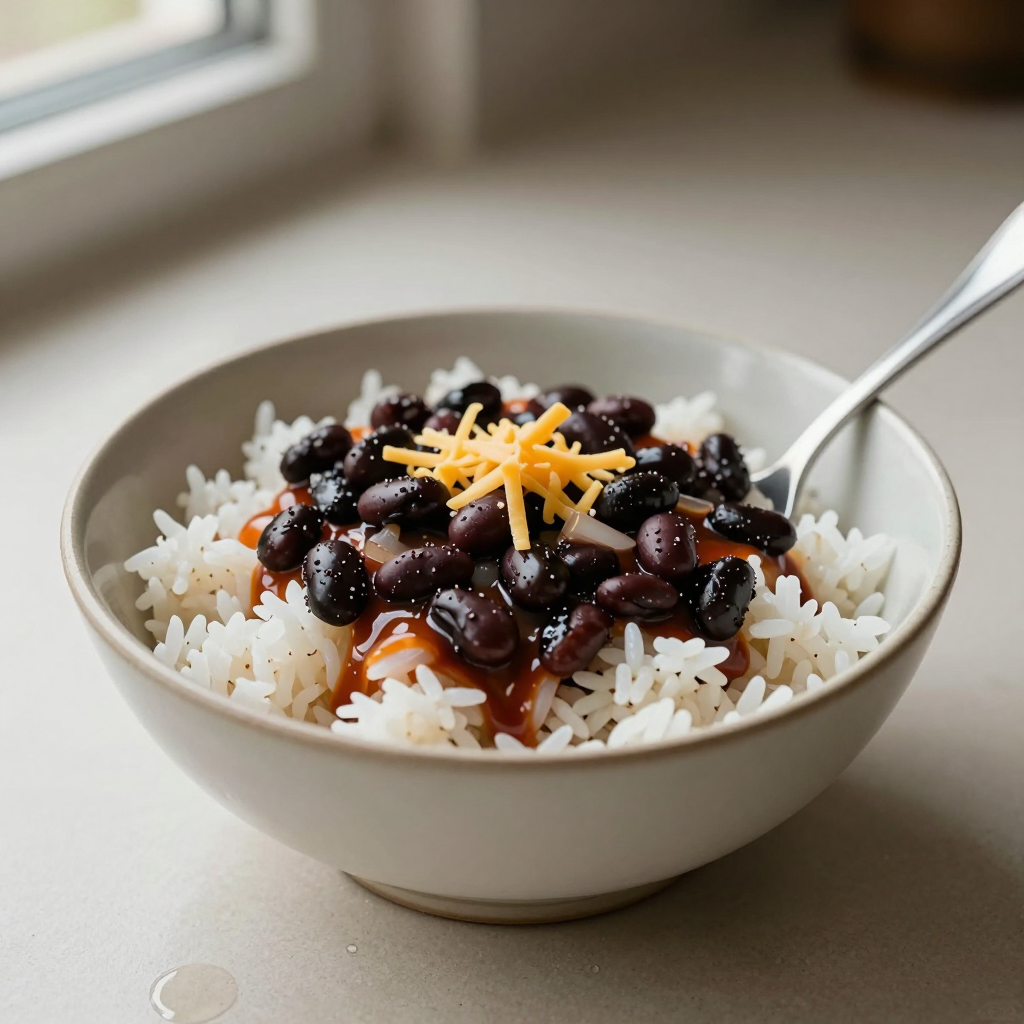
Rice and Beans Bowl
Warm beans with seasoning and spoon over rice.
Estimated cost: about $0.50–0.90 per serving
Why it works: filling, cheap, easy to scale
Peanut Butter Oatmeal
Cook oats and stir in peanut butter. Add banana, cinnamon, or jam if available.
Estimated cost: about $0.40–0.70 per serving
Best for: breakfast or a cheap backup meal
Pasta with Garlic Oil and Peas
Cook pasta and toss with oil or butter, frozen peas, black pepper, and a little cheese if you have it.
Estimated cost: about $0.70–1.20 per serving
Why it works: short ingredient list, still feels like a full meal
Potato Skillet with Eggs
Cook diced potatoes with onion and top with eggs.
Estimated cost: about $1–1.50 per serving
Best for: end-of-week cooking when the fridge is sparse
Tomato Lentil Soup
Simmer lentils with canned tomatoes, onion, and broth or water.
Estimated cost: about $0.60–1 per serving
Why it works: cheap, warm, and good for leftovers
Pantry Fried Rice
Use leftover rice, egg, frozen vegetables, and soy sauce.
Estimated cost: about $0.80–1.25 per serving
Best for: using leftovers in a way that feels fresh
Peanut Noodles with Frozen Vegetables
Mix peanut butter, soy sauce, water, and garlic powder into a quick sauce for noodles or rice.
Estimated cost: about $0.70–1.20 per serving
Why it works: a different flavor profile without expensive ingredients
Pasta with Tomato Lentil Sauce
Use lentils to stretch a tomato-based pasta meal.
Estimated cost: about $0.90–1.40 per serving
Best for: making pasta feel more substantial without meat
Quick Comparison
| Meal | Estimated cost per serving | Best use |
|---|---|---|
| Rice and beans bowl | $0.50–0.90 | lunch or dinner |
| Peanut butter oatmeal | $0.40–0.70 | breakfast |
| Pasta with peas | $0.70–1.20 | quick dinner |
| Potato skillet with eggs | $1–1.50 | hearty dinner |
| Tomato lentil soup | $0.60–1 | dinner + leftovers |
| Pantry fried rice | $0.80–1.25 | use-up meal |
What Worked Best in Practice
The pantry meals that worked best usually had a few things in common:
- they used ingredients already kept on hand
- they took less than 30 minutes
- they were filling enough to prevent snack spending later
- they could be repeated in slightly different forms
The biggest savings usually came from having 5–6 dependable meals ready in your head before the week got stressful.
How to Make Pantry Meals Feel Less Repetitive
The issue is usually not the ingredients. It is the format.
A few easy ways to change the feel of the same foods:
- switch the seasoning before changing the base
- use the same rice in bowls, soup, or fried rice
- use beans in bowls, tacos, or soup
- use toast, cheese, salsa, or yogurt as a small flavor booster
- rotate between soup, skillet, bowl, pasta, and breakfast-for-dinner formats
Variety often comes more from structure than from buying more groceries.
A Simple Weekly Pantry Plan
Here is one realistic example:
| Day | Meal |
|---|---|
| Monday | Rice and beans bowl |
| Tuesday | Pasta with garlic oil and peas |
| Wednesday | Potato skillet with eggs |
| Thursday | Tomato lentil soup and toast |
| Friday | Pantry fried rice |
| Saturday | Peanut butter oatmeal + simple pantry snack dinner |
| Sunday | Pasta with tomato lentil sauce or use-up meal |
This kind of plan is not about excitement. It is about reducing emergency decisions that usually become expensive ones.
Pantry Mistakes That Raise the Grocery Bill
Buying staples without a plan
Cheap ingredients are only useful if you know how to use them in at least 2–3 meals.
Treating every low-stock week like a full grocery emergency
Sometimes you only need one or two connecting ingredients, not a full restock.
Ignoring freezer leftovers
Frozen vegetables, cooked rice, or leftover meat are part of the pantry strategy too.
Underestimating breakfast and lunch
A weak breakfast and lunch setup often leads to extra spending later in the day.
Using convenience food as the default backup
A pantry meal only works if you know it well enough to use it before takeout starts sounding easier.
What Didn’t Work as Well
A few patterns made pantry cooking less effective:
- buying foods the household did not actually like
- keeping too many one-purpose items
- trying unfamiliar recipes during already stressful weeks
- making meals too small, then needing snacks later
The strongest pantry systems were usually the simplest ones.
Why Pantry Meals Help the Whole Budget
Pantry meals do more than reduce dinner cost.
They also reduce:
- last-minute grocery runs
- delivery orders
- convenience-store purchases
- the feeling that every hard night needs a paid solution
That is why pantry cooking works especially well alongside Budget Grocery List for a Tight Week and Cheap Breakfast Ideas for Busy Mornings.
Keep Going
If you want to make this easier long-term, How to Stock a Frugal Pantry From Scratch is the best next step.
And for more low-cost dinner ideas using the same kinds of ingredients, the Recipes category archive keeps the whole cluster connected.
FAQ
What is the cheapest pantry meal?
Rice and beans is usually one of the cheapest dependable options because it is filling, flexible, and easy to season different ways.
What if I only have a few ingredients?
Use the simple formula: one starch, one protein, one flavor source.
Are pantry meals healthy enough for a hard month?
They can be, especially when built around beans, lentils, eggs, oats, potatoes, and frozen vegetables.
How do I make pantry meals more filling?
Use starch + protein together, and add a small flavor booster like cheese, salsa, or toast if available.
Conclusion
Pantry meals help because they turn “we have nothing” into something workable.
You do not need restaurant-style dinners or a huge pantry stockpile. You need a short list of ingredients that overlap well and a few meals you can make without much thinking.
That is usually what keeps a tight week from turning into an expensive one.