Some grocery weeks are normal. Others are clearly tighter.
A bill hits at the wrong time, a paycheck needs to stretch longer than expected, or several expenses land in the same week. In those situations, grocery shopping tends to drift — and that’s usually where extra spending shows up.
A tight-week grocery list works because it removes that uncertainty. Instead of deciding everything in the store, you go in with a small structure built around foods that can carry multiple meals.
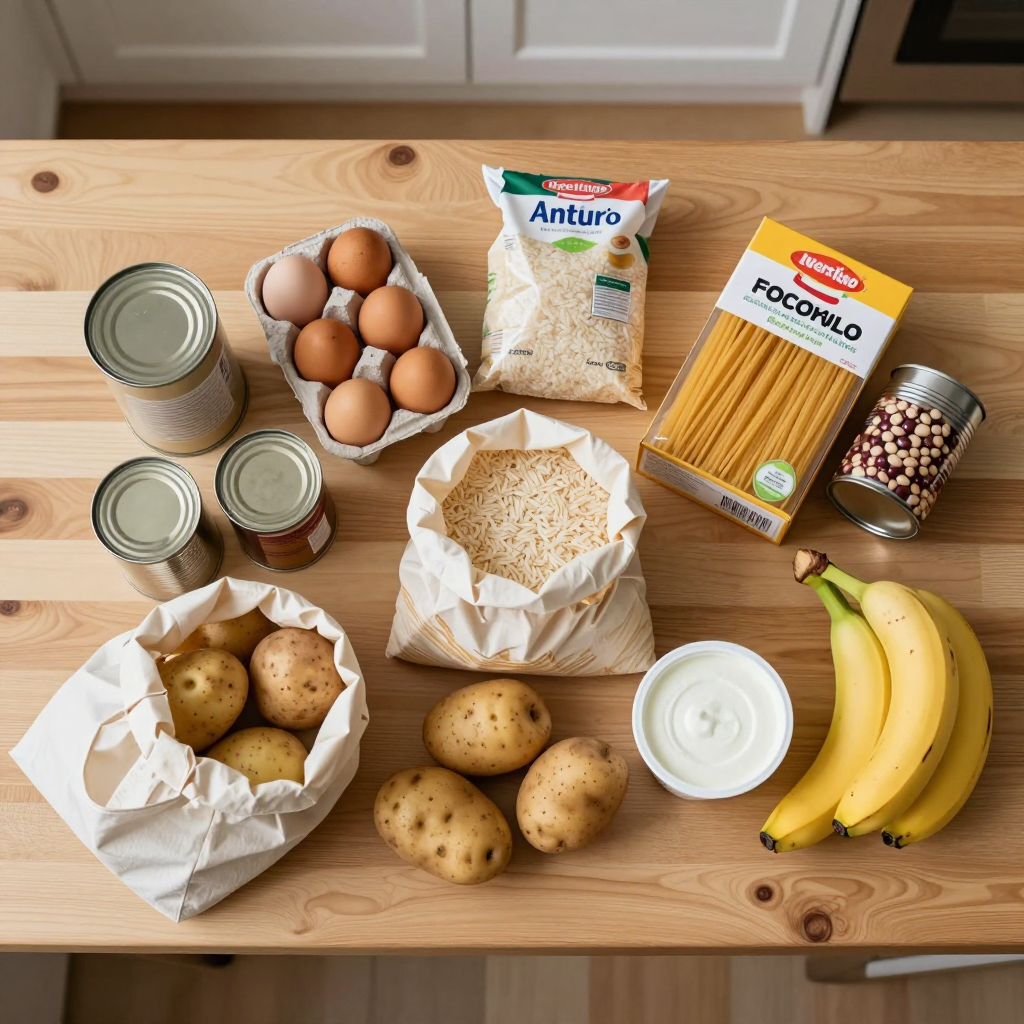
This is not a “perfect” grocery list. It’s a practical one — built around low-cost staples, flexible meals, and ingredients that don’t go to waste easily.
⚠️ Prices vary by region and store. In lower-cost areas this type of list can land around $30–50. In higher-cost areas, expect $50–70 for the same structure.
What a Tight-Week Grocery List Needs to Do
A useful budget grocery list should:
- cover several meals with the same ingredients
- reduce food waste
- keep meals filling enough to avoid snack spending
- lower the chance of takeout or emergency food purchases
In practice, that usually means relying on simple, repeatable foods — not variety.
Core Principles That Actually Work
Choose overlap over variety
The same ingredient should show up in multiple meals.
Favor ingredients with more than one role
Rice, eggs, potatoes, oats, and bread can cover breakfast, lunch, and dinner.
Build enough structure to avoid convenience spending
A cheap grocery trip only saves money if it prevents a second one.
A Practical Budget Grocery List (Example)
This is a typical structure for a tight week:
- Oats
- Bread
- Peanut butter
- Eggs
- Rice
- Pasta
- Canned beans
- Lentils
- Potatoes
- Bananas
- Plain yogurt
- Frozen vegetables
- Canned tomatoes
- Onions
- Shredded cheese
Estimated Cost Range
| Category | Estimated cost |
|---|---|
| Grains (rice, pasta, oats, bread) | $10–18 |
| Proteins (eggs, beans, lentils, peanut butter) | $10–18 |
| Produce (potatoes, bananas, onions) | $8–15 |
| Dairy / extras (yogurt, cheese) | $6–12 |
| Frozen + canned items | $6–12 |
| Total | $40–70 |
This range reflects real store variation — the structure matters more than the exact number.
Meals This List Can Support
Breakfast
- Oatmeal with peanut butter
- Toast with peanut butter and banana
- Eggs and toast
- Yogurt with oats
Lunch
- Rice and beans bowls
- Egg sandwiches
- Lentil soup leftovers
- Toast + fruit + yogurt
Dinner
- Pasta with tomatoes and frozen vegetables
- Potato skillet with eggs
- Lentil soup and toast
- Rice bowls with beans and vegetables
The goal is not variety — it’s coverage.
What Worked Best in Practice
When using lists like this, the weeks that stayed on budget usually had:
- 2–3 repeat dinner bases (rice, pasta, potatoes)
- ingredients used across multiple meals
- leftovers planned into the week
- simple breakfasts that didn’t require extra shopping
The biggest difference wasn’t finding cheaper ingredients — it was reducing waste and avoiding second trips.
What Didn’t Work as Well
A few patterns tended to push spending back up:
- adding snacks and drinks “just in case”
- buying items that didn’t connect to meals
- trying to make every dinner different
- cutting all flavor (which led to takeout later)
A tight grocery list works best when it is simple but still usable.
How to Keep the List Cheap in the Store
This is where most tight-week plans break:
- snacks get added
- drinks go into the cart automatically
- “just in case” items sneak in
- sales change the plan
A simple rule helps:
👉 If it doesn’t support a planned meal, pause before adding it.
Where Price Comparison Actually Matters
You don’t need to compare everything.
Focus on the items you buy repeatedly:
- eggs
- oats
- rice
- pasta
- yogurt
Those few categories usually drive most of the savings over time.
Tight-Week Grocery Mistakes That Cost More Later
Buying food no one wants
Cheap food only works if it gets eaten.
Cutting all flavor
Meals that feel too basic often lead to extra spending later.
Skipping breakfast planning
Breakfast is one of the easiest places to save — or overspend daily.
Ignoring leftovers
Meals that carry into the next day are one of the strongest budget tools.
How This List Protects the Rest of Your Budget
Food decisions spill into everything else.
When meals are unclear:
- mornings get rushed
- weekends get more expensive
- takeout becomes easier
A simple grocery list reduces that pressure across the week.
A Simple Way to Build Your Own List
If you want your own version:
- Pick 2 breakfast bases (oats, eggs, toast)
- Pick 3 dinner starches (rice, pasta, potatoes)
- Add 2 proteins (beans, eggs, lentils, chicken if budget allows)
- Add 1–2 produce items
- Add 1 flavor booster (cheese, sauce, or seasoning)
That’s enough structure for most tight weeks.
Keep Going
If you want more meal ideas using this kind of list, Pantry Meals When You’re Broke fits directly with it.
And for improving the shopping side, How to Price Compare Groceries Without Wasting Time helps without turning grocery shopping into a full-time job.
FAQ
What is the cheapest food for a tight week?
Oats, rice, eggs, potatoes, pasta, and beans are usually the most reliable low-cost staples.
Should I buy in bulk?
Only if you know you’ll use it. Bulk only saves money when nothing gets wasted.
How do I stop my grocery list from growing?
Decide the purpose of the trip before you go and compare every extra item against it.
Is this realistic for families?
Yes — especially when meals overlap and waste stays low. The structure is more important than the exact foods.
Related Reading
Conclusion
A budget grocery list for a tight week works because it removes expensive uncertainty.
It doesn’t need to be perfect or creative. It needs to be simple, repeatable, and built around foods that actually get used.
The best cheap grocery list is the one that gets you through the week without extra trips, extra decisions, or extra spending.