Breakfast gets expensive when mornings are rushed.
A quick coffee stop, a convenience sandwich, or a drive-thru meal may not look like much on a single receipt. But repeated several times a week, it can quietly add $50–150 per month to a household budget.
Cheap breakfasts help because they remove that daily decision. Instead of improvising every morning, you rely on a short list of meals that are fast, familiar, and already planned.
The goal is not to make breakfast perfect. It is to make the cheapest reasonable option the easiest one.
⚠️ Costs vary by location and store, but most of the meals below fall roughly in the $0.50–$2 per serving range using basic grocery staples.
Why Breakfast Is One of the Easiest Places to Save
Breakfast spending usually comes from time pressure, not preference.
When mornings are rushed:
- decisions are faster
- convenience wins
- small purchases repeat
That is why even a simple routine can make a noticeable difference.
A low-cost breakfast setup helps by:
- reducing impulse spending
- preventing mid-morning snack purchases
- simplifying grocery planning
- making mornings more predictable
Budget Breakfast Staples That Actually Work
Most cheap breakfasts rely on a small group of repeat ingredients:
- Oats
- Eggs
- Bread or tortillas
- Peanut butter
- Yogurt
- Bananas
- Frozen fruit
- Potatoes
- Cheese
- Leftover rice
These work because they overlap with other meals and store well.
Cheap Breakfast Ideas for Busy Mornings
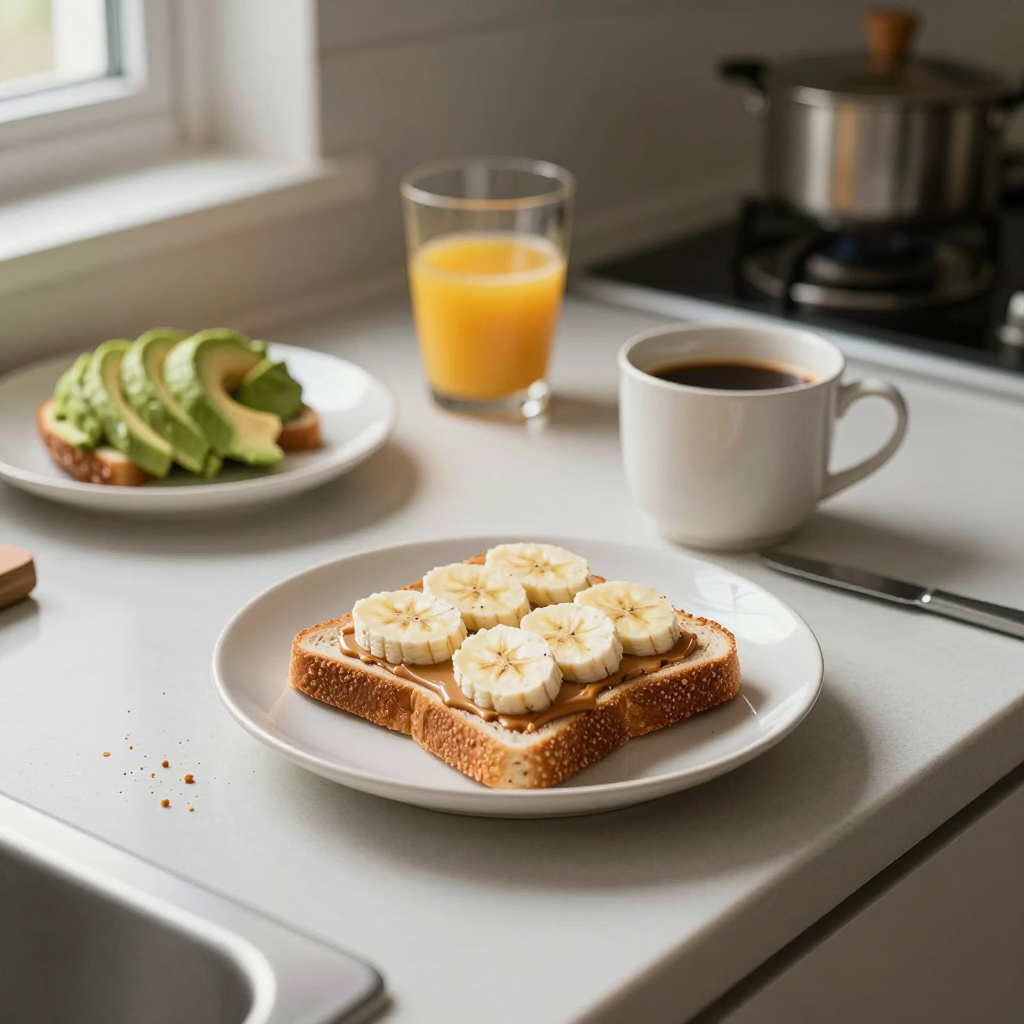
Peanut Butter Toast with Banana
Simple, fast, and filling.
Estimated cost: $0.50–1 per serving
Oatmeal with Peanut Butter
Oats are one of the cheapest staples available, and peanut butter makes them more filling.
Estimated cost: $0.50–0.90 per serving
Eggs and Toast
Two eggs and toast is still one of the most reliable low-cost breakfasts.
Estimated cost: $1–1.75 per serving
Yogurt with Oats and Fruit
Works well for a cold, quick option without relying on single-serve cups.
Estimated cost: $1–2 per serving
Breakfast Burritos (Using Leftovers)
Eggs, rice, beans, or potatoes wrapped in a tortilla.
Estimated cost: $1–2 per serving
Potatoes with Eggs
Especially useful if potatoes are already cooked from dinner.
Estimated cost: $1–1.75 per serving
What Worked Best in Practice
The breakfasts that consistently worked well had a few things in common:
- used ingredients already in the house
- required very little prep in the morning
- could be repeated without getting tiring
- didn’t depend on buying something new
The biggest difference wasn’t finding the cheapest meal — it was having something ready enough that convenience food wasn’t needed.
A Simple Weekly Breakfast Rotation
| Day | Breakfast | Estimated cost |
|---|---|---|
| Monday | Oatmeal with peanut butter | $0.50–0.90 |
| Tuesday | Eggs and toast | $1–1.75 |
| Wednesday | Yogurt with oats and fruit | $1–2 |
| Thursday | Peanut butter toast + banana | $0.75–1.25 |
| Friday | Breakfast burrito | $1–2 |
| Saturday | Potatoes and eggs | $1–1.75 |
| Sunday | Leftovers or flexible option | $0.50–2 |
This works because ingredients repeat without every day feeling identical.
Low-Effort Make-Ahead Ideas
Full meal prep is not necessary. Small prep steps help enough:
- boil eggs for 2–3 days
- prep overnight oats in small batches
- freeze bread for easy use
- keep fruit washed and ready
- save cooked potatoes or rice from dinner
The goal is not perfection — it is reducing friction.
What Didn’t Work as Well
Some “budget breakfast” ideas sounded good but didn’t hold up:
- buying convenience versions of cheap foods (pre-packaged oatmeal, snack packs)
- skipping breakfast and buying snacks later
- trying to prep too much at once
- relying on complicated recipes
Simple, repeatable meals usually worked better.
Common Mistakes That Increase Breakfast Costs
Buying convenience versions of cheap foods
Single-serve items are often more expensive than basic ingredients.
Skipping breakfast entirely
This often leads to mid-morning purchases.
Treating breakfast as an automatic purchase
Coffee runs and quick stops add up quickly when they become routine.
Ignoring leftovers
Rice, potatoes, beans, and vegetables can all be reused for breakfast.
How Breakfast Affects the Rest of the Budget
Breakfast influences more than just the morning.
A consistent low-cost breakfast can:
- reduce snack spending later
- lower impulse purchases during the day
- make grocery planning easier
- stabilize the rest of the food budget
That is why it pairs naturally with routines like Pantry Meals When You’re Broke and broader weekly planning.
Keep Going
If mornings feel rushed overall, Budget Grocery List for a Tight Week helps reduce decision-making across all meals.
And if you want more low-cost meal ideas, the Recipes category archive connects everything together.
FAQ
What is the cheapest good breakfast?
Oatmeal, eggs and toast, and peanut butter toast are among the most reliable low-cost options.
How do I make breakfast cheaper without more work?
Use repeat ingredients and do small prep steps instead of full meal prep.
Is it cheaper to skip breakfast?
Not usually. It often leads to snack or convenience spending later.
How do I avoid getting bored?
Rotate formats instead of ingredients. Use the same foods in different ways.
Conclusion
Cheap breakfasts work because they remove one of the easiest ways money leaks out of a budget: rushed decisions.
You don’t need a long list of recipes. You need a short rotation of meals that are fast, familiar, and easy to repeat.
When breakfast becomes automatic, it gets cheaper — and the rest of the day usually follows.