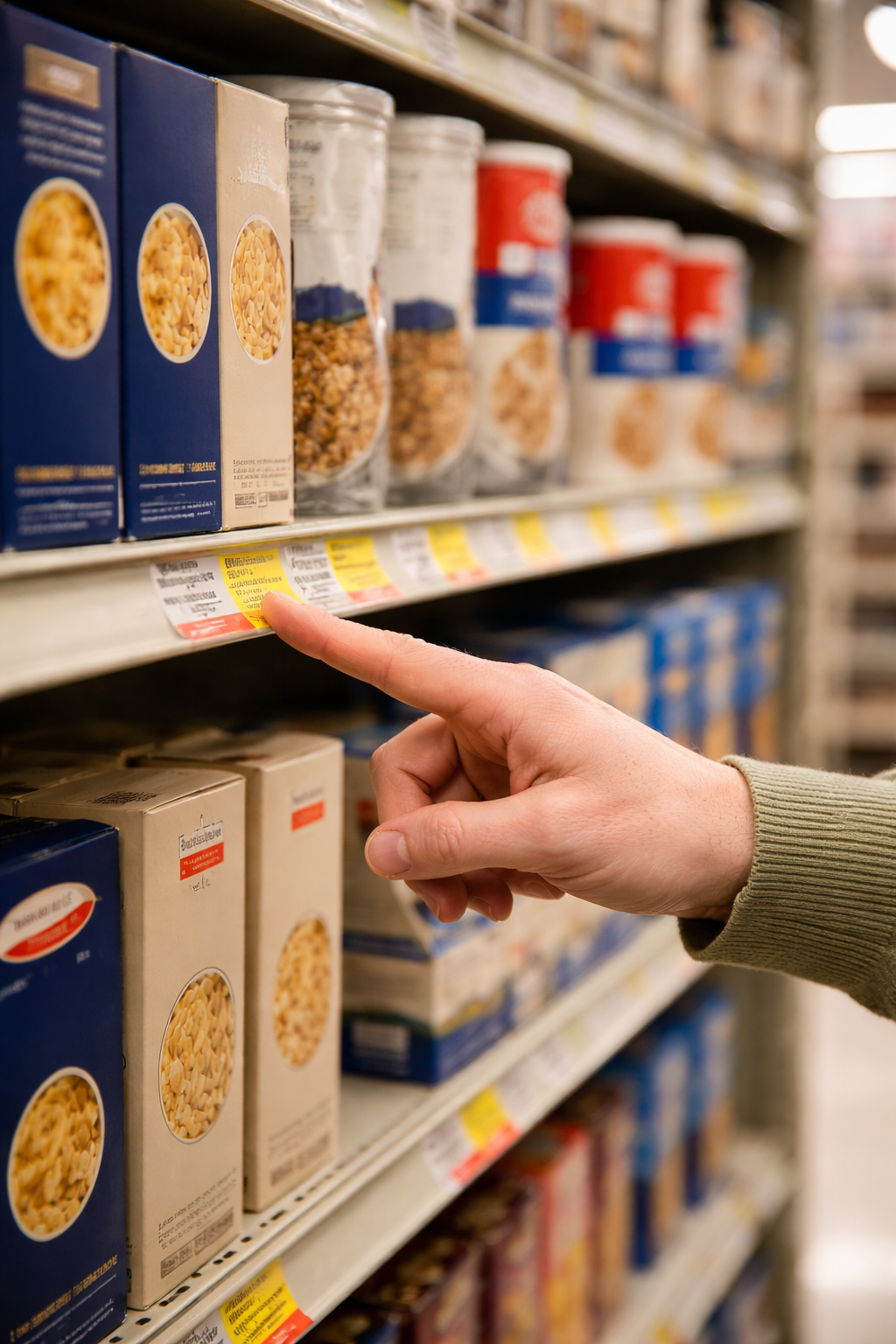
Price comparison sounds simple — until it starts feeling like work.
If every grocery trip turns into checking five stores, comparing every ounce, and second-guessing every item, the system breaks. A useful approach has to save money and be easy enough to repeat every week.
The goal is not perfect pricing. The goal is better decisions on the handful of items that actually matter.
If you want the broader view of this topic, start with the Smart Shopping category archive. This also pairs naturally with practical meal systems like Pantry Meals When You’re Broke, where your grocery choices actually get used.
What price comparison should actually do
A good system helps you:
- Recognize a fair price
- Avoid fake deals
- Choose quickly between similar options
That’s it.
You don’t need to analyze everything. You need enough clarity to stop overpaying out of habit.
Why groceries feel expensive without reference prices
Most people shop on instinct:
- something looks cheap
- something feels expensive
But stores are designed to influence that instinct. Sale signs, shelf placement, and packaging all push you toward certain choices.
Without a reference price, it’s easy to assume you’re getting a deal when you’re not.
A simple baseline changes everything. Once you know what you usually pay for staples, you can spot real value instantly.
Start small: 10–15 items is enough
Do not try to compare everything.
Start with the items you buy every week:
- Milk
- Eggs
- Bread
- Oats
- Rice
- Pasta
- Peanut butter
- Yogurt
- Chicken
- Ground meat
- Bananas
- Potatoes
- Cheese
These drive most of your grocery spending. Improving decisions here gives you most of the benefit with minimal effort.
Use unit price — but selectively
Unit price (cost per pound, ounce, or count) is useful, but only in the right situations.
Use it when:
- package sizes vary
- brands are very similar
- a sale makes a larger size look better
Good candidates:
- oats
- rice
- peanut butter
- cereal
You don’t need to calculate unit price for everything — just where it actually changes the decision.
Common mistakes that cost more than they save
Assuming bigger is always cheaper
Bulk is often cheaper — but not always. Sales and store brands can beat larger sizes.
Ignoring waste
A cheaper item that goes bad is not cheaper.
Chasing random sales
Most savings come from staples, not one-off deals.
Skipping store brands
They’re not always better — but often worth checking.
A fast routine that actually works
This is enough for most households:
- Keep a short staple list in your phone
- Know a rough “normal” price for each item
- Compare brands only for those items
- Ignore deep comparisons on everything else
Over time, this becomes automatic. You stop thinking about it — you just recognize good prices.
Why meal planning makes this easier
Price comparison works best when you already know what you’re buying.
Without a plan:
- everything looks like a potential deal
- your cart fills with random items
With a plan:
- you compare only what matters
- decisions become faster
This is why it works well alongside routines like Cheap Breakfast Ideas for Busy Mornings, where the same ingredients repeat.
One store vs. multiple stores
Trying to optimize every trip across multiple stores usually fails.
Use a second store only if:
- it consistently beats your main store on staples
- you’re already passing it
- the savings are noticeable
Avoid it if:
- it requires a separate trip
- you’re saving only a few dollars
- it complicates your routine
Consistency beats optimization.
How to spot a real sale
A sale is useful when:
- it’s something you already buy
- the unit price is actually lower
- you’ll use it before it goes bad
- it doesn’t create waste elsewhere
If those don’t hold, it’s not really saving you money.
Where price comparison matters most
Focus on categories with the biggest return:
Pantry basics
Rice, oats, pasta, beans, peanut butter — consistent and comparable.
Dairy and eggs
Prices move often and add up quickly.
Meat and frozen proteins
Small differences per pound matter here.
Household basics
Items like dish soap or paper products can quietly inflate grocery spending. Keeping systems simple — like with Weekly Home Reset Routine on a Budget — helps reduce overbuying.
Build a simple price memory
You don’t need a spreadsheet.
A rough mental range is enough:
- eggs below X feel fair
- oats above Y feel expensive
- one yogurt brand is consistently cheapest
That awareness builds quickly and makes shopping faster, not slower.
How this fits into your overall budget
Price comparison only works if it connects to real habits.
If you:
- waste food
- buy takeout from lack of planning
- overspend on convenience items
…then grocery savings disappear.
That’s why this works best alongside simple routines across the Smart Shopping category archive. Good decisions come from systems, not effort in the aisle.
FAQ
What is the fastest way to compare grocery prices?
Focus on 10–15 staple items and use unit price only when it clearly affects the decision.
Is it worth going to multiple stores?
Only if the savings are consistent and the extra trip doesn’t add friction.
Should I always buy store brands?
Not always — but they’re often the easiest way to reduce spending.
How do I keep this from taking too long?
Limit comparisons to staple items and use rough price memory instead of detailed tracking.
Conclusion
Price comparison works when it’s simple.
You don’t need perfect data. You need:
- a short list of staples
- a rough sense of normal prices
- a repeatable routine
That’s enough to reduce overspending without turning grocery shopping into a project.