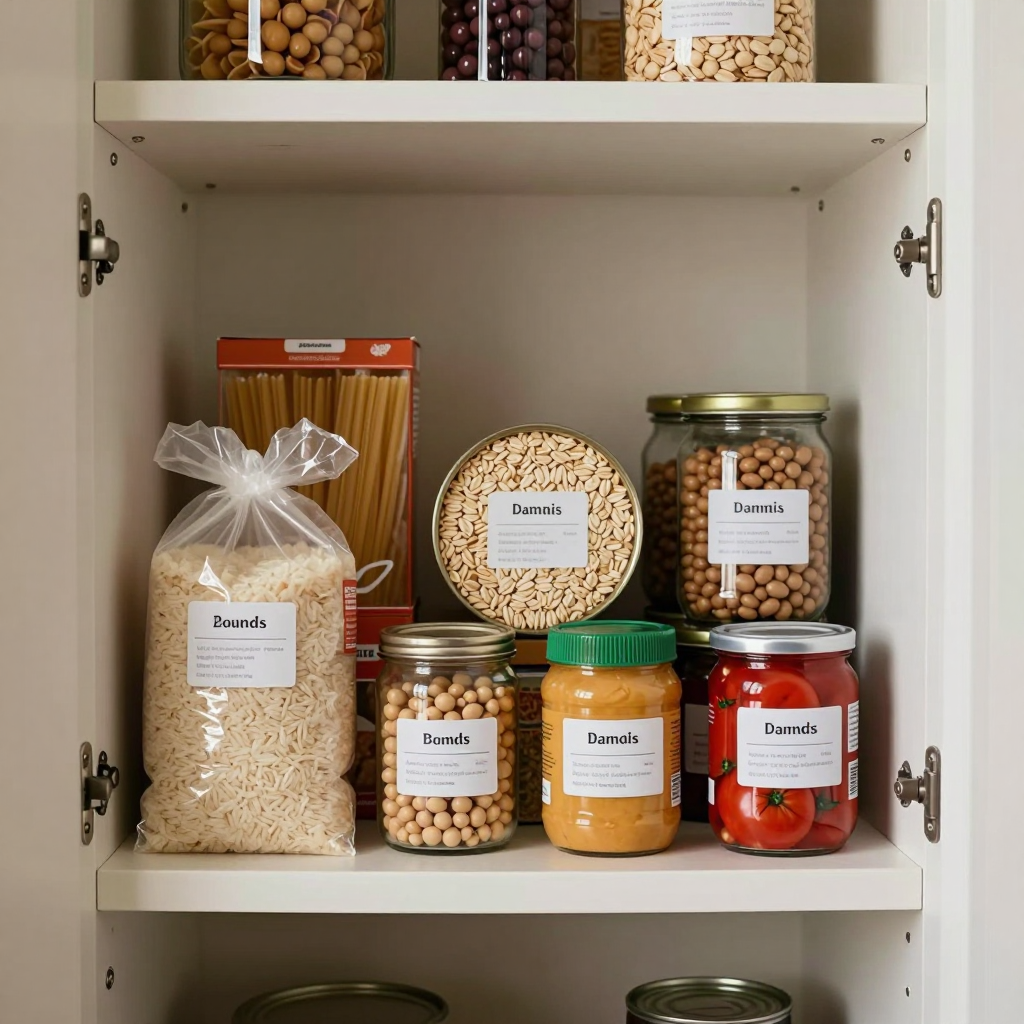
When you are starting from an empty pantry, the instinct is usually to overbuy.
Maybe you just moved. Maybe you have been living on takeout. Maybe you are trying to cook more and feel like you need a “real pantry” first. That often turns into a big shopping trip full of ingredients that look useful but do not actually connect to meals you already know how to make.
What worked better for us was building slowly.
A useful pantry is not a big stockpile. It is a small set of ingredients that overlap with the meals your household already eats, built gradually enough that you can see what is actually getting used.
⚠️ Prices below are rough estimates based on typical U.S. budget-store pricing. Actual totals vary by region, store, and sale timing.
What worked best: buy what you actually cook
The most useful pantry rule is simple:
Buy what fits your real meals, not your ideal version of yourself.
If your household already eats:
- pasta with tomato sauce
- rice and beans
- quesadillas
- fried rice
- oatmeal
…then your core pantry probably looks more like this:
- rice
- pasta
- oats
- canned or dried beans
- canned tomatoes
- tortillas
- eggs
- cooking oil
- salt
- garlic powder
- cumin or chili powder
That is enough to support real food.
The expensive mistake is buying pantry items for meals you do not actually make.
The 3-week pantry build
Trying to buy everything at once usually makes the bill feel bigger than it needs to.
A slower build works better.
| Week | What to buy | Estimated cost | What it supports |
|---|---|---|---|
| Week 1 | Rice, pasta, oats, 2 cans of beans, 1 can of tomatoes | $12–18 | Oatmeal, pasta, rice bowls, soup base |
| Week 2 | Peanut butter, cooking oil, eggs, dried lentils | $12–15 | Eggs and toast, fried rice, lentil soup, peanut butter breakfasts |
| Week 3 | Salt, pepper, garlic powder, cumin or chili powder, soy sauce, broth | $8–12 | Turns staples into actual meals |
Estimated total: about $32–45 over three weeks
That is enough to build a functional pantry without turning one grocery trip into a major expense.
Why the “flavor week” matters
Week 3 looks less important than it is.
Plain rice is cheap, but it does not feel like dinner. Rice with soy sauce, garlic, and a fried egg is still cheap, but much more usable.
A pantry starts working when the ingredients can turn into meals people actually want to eat.
Use the overlap test
Before adding a pantry item, ask:
Can I use this in at least 3 different meals this month?
That one question filters out a lot of waste.
| Pantry item | Works in several meals? | Verdict |
|---|---|---|
| Rice | Yes | Stock it |
| Canned beans | Yes | Stock it |
| Eggs | Yes | Stock it |
| Oats | Yes | Stock it |
| Specialty sauce you use once | Usually no | Buy only if needed |
| Random baking ingredient for one recipe | Usually no | Buy only if needed |
The pantry items that save money are the ones that show up again and again.
Price anchors worth knowing
You do not need a spreadsheet. You just need a rough sense of what a normal price looks like for the staples you buy often.
Here is a practical example:
| Item | Rough normal range | Good buy range |
|---|---|---|
| Rice (5 lb) | $3.50–5.50 | under $3.50 |
| Pasta (1 lb) | $1–2 | under $1 |
| Oats | $3–5 | under $3 |
| Canned beans | $0.80–1.25 | under $0.75 |
| Canned tomatoes | $0.90–1.50 | under $0.80 |
| Peanut butter | $2.50–4 | under $2.50 |
| Eggs | highly variable | buy based on your store’s usual low |
| Cooking oil | $3.50–5.50 | under $3.50 |
| Dried lentils | $1.50–2.50 | under $1.50 |
| Soy sauce | $1.50–2.50 | under $1.50 |
This is enough information to recognize a real deal without turning grocery shopping into a project.
If you want more on that, How to Price Compare Groceries Without Wasting Time fits directly with this article.
What we’d do differently
The biggest issue was not usually buying the wrong foods.
It was forgetting the right ones.
Pantries waste money when:
- older items get pushed to the back
- duplicate items get bought because nothing is visible
- meal planning happens without checking what is already there
A few small fixes help a lot:
Put new items behind older ones
Older cans and boxes stay in front.
Keep your most-used staples at eye level
Rice, pasta, oats, and beans should be the easiest things to reach.
Do a 60-second pantry scan before shopping
Not organizing. Just looking.
That one habit is often enough to stop duplicate purchases.
Pantry mistakes that create waste
Buying in bulk too early
Bulk only saves money when your household actually uses the item consistently.
Buying “aspirational” ingredients
A pantry should reflect what your household eats now, not what you hope to become later.
Overstocking spices
A few spices you use often are better than 15 jars that sit untouched.
Treating the pantry separately from meal planning
A pantry only saves money when it connects directly to the meals you cook each week.
What a small working pantry can support
Even a basic pantry can cover a lot:
Breakfast
- oatmeal
- peanut butter toast
- eggs and toast
Lunch
- rice and beans
- egg sandwiches
- leftover lentil soup
Dinner
- pasta with tomatoes
- fried rice
- lentil soup
- quesadillas
- bean bowls
That is what makes a pantry useful: not variety for its own sake, but dependable meals.
Keep going
If you want to see how this turns into actual dinners, Pantry Meals When You’re Broke is the natural next step.
And if your bigger goal is lowering the whole weekly grocery trip, Budget Grocery List for a Tight Week fits well too.
FAQ
What should I buy first for a frugal pantry?
Start with the items that match meals you already cook: usually rice, pasta, oats, beans, tomatoes, and a few seasonings.
Is it cheaper to build a pantry all at once?
Usually no. Building across 2–3 weeks is easier on the budget and makes waste less likely.
How do I keep pantry food from going to waste?
Keep older items in front, check the pantry before shopping, and plan meals around what is already there.
Do I need a large pantry to save money?
No. A small pantry built around 10–15 regularly used items is often more useful than a large pantry full of one-off ingredients.
Related Reading
Conclusion
A frugal pantry does not need to be impressive.
It needs to be usable.
When the pantry is built around foods your household already eats, expanded gradually, and checked before you shop, it becomes a tool that saves money instead of a shelf full of forgotten ingredients.