Impulse buying at the grocery store usually does not start with one big mistake.
It starts with wandering. One extra item in the cereal aisle, another near dairy, something from an endcap you did not plan for. On paper those purchases look small, but over a month they can push a grocery budget up more than most people realize.
The small change that helped most was not a coupon strategy or stricter discipline. It was changing how the grocery list was written.
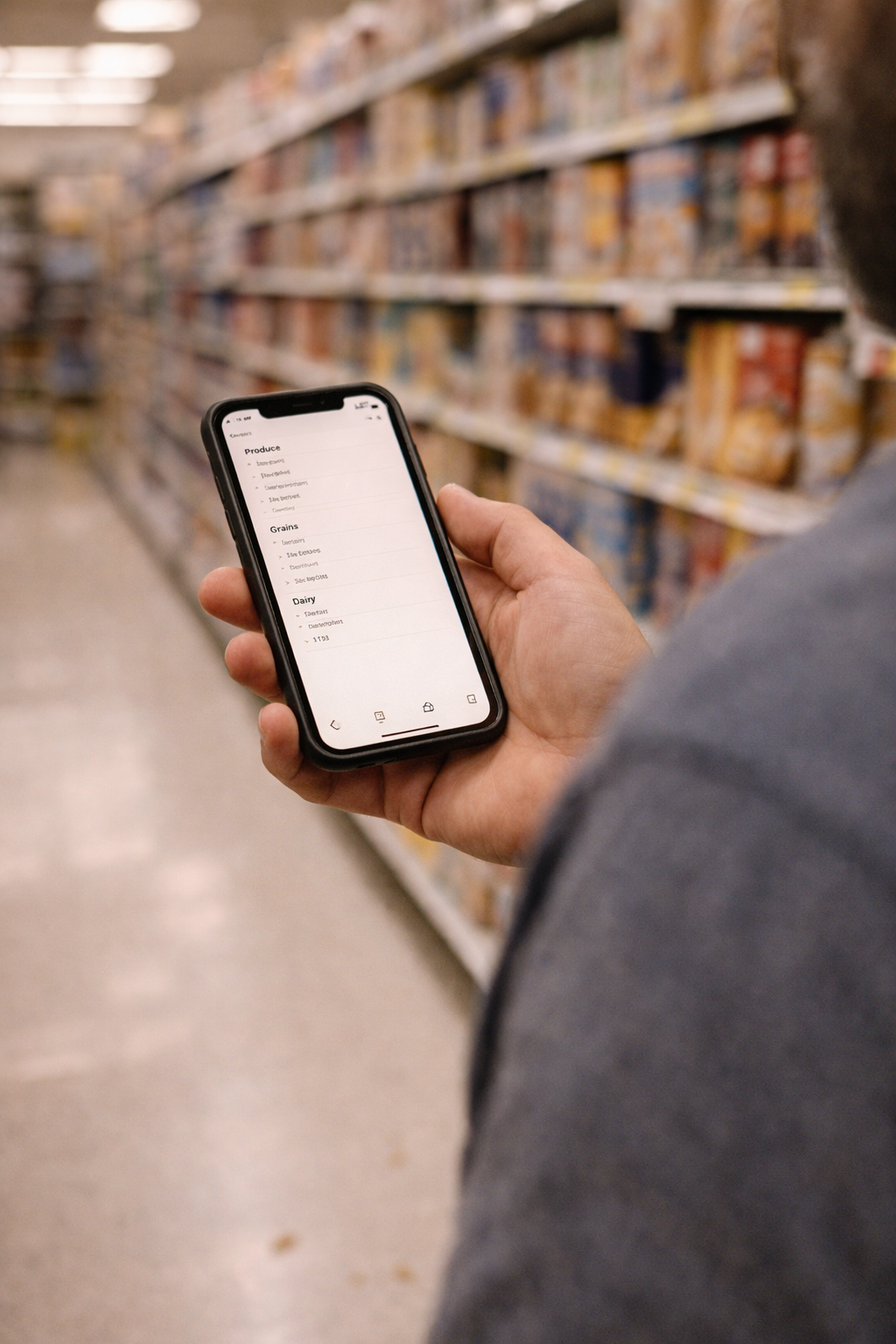
Instead of writing the list randomly, or grouping it loosely by meal, I started organizing it in the exact order I walk through the store. That one shift made shopping faster, reduced backtracking, and cut down impulse purchases noticeably.
⚠️ The savings will vary depending on your store, your shopping habits, and whether you already use a list consistently. But this method is simple enough that it is worth trying.
The Trick: Write the List in Store Order
The idea is simple:
Write your grocery list in the same order you move through your usual store.
That might look like:
- Produce
- Meat
- Dairy
- Pantry items
- Frozen
- Household basics
Or, if you know the store very well, it might be even more specific by aisle.
The point is not perfection. The point is reducing random movement through the store.
Why This Helps So Much
When the list is written in random order, shopping usually turns into a lot of scanning and backtracking.
That creates a few problems:
- you spend more time looking at items you did not come for
- you make more decisions than necessary
- the trip feels less controlled
- impulse purchases have more opportunities to sneak in
Once the list matches the path through the store, shopping becomes more like a checklist and less like browsing.
In practice, that usually means:
- less wandering
- fewer “just in case” purchases
- less mental fatigue by the end of the trip
What Changed in Practice
The biggest difference was not that impulse buying disappeared completely. It was that it became easier to notice.
When shopping with a store-ordered list:
- the trip moved faster
- fewer unplanned items made it into the cart
- it became more obvious when something was truly needed versus just tempting in the moment
That shift alone can make a grocery list work much better.
Example: Random List vs. Store-Order List
Here is the difference in practice.
Random version
- Chicken
- Broccoli
- Rice
- Yogurt
- Garlic
- Pasta
- Milk
Store-order version
- Produce: broccoli, garlic
- Meat: chicken
- Pantry: rice, pasta
- Dairy: yogurt, milk
The items are the same. The experience in the store is not.
A Simple Way to Set It Up
You only need to do this once for your regular store.
Step 1: Notice the layout
On your next trip, pay attention to the general order of departments or aisles.
Step 2: Make a simple template
Create a phone note with your usual shopping order.
For example:
- Produce
- Meat
- Dairy
- Pantry
- Frozen
- Household
Step 3: Fill in your list under those headings
Now every trip starts from the same structure.
This only takes an extra minute or two and makes the actual shopping trip smoother.
Add a Rule for Off-List Items
This method works even better with a simple pause rule.
If you see something not on the list:
- stop for a moment
- ask whether you would have come to the store specifically for it
- ask whether it replaces something already planned or just adds cost
That short pause helps separate a real need from a passing impulse.
A useful version is:
“If this was not on my list, does it still fit the budget and the meals for this week?”
If the answer is no, it usually goes back.
What Worked Best in Practice
The strongest version of this method usually included three things together:
- a meal plan or at least a rough dinner plan
- a list written in store order
- a pause rule for anything not listed
On its own, store order helps. Combined with a basic meal plan, it works even better because the shopping trip already has a clear purpose.
That is why this pairs naturally with How to Meal Plan When You’re Not a Planner.
What Didn’t Work as Well
A few things made the system less effective:
- writing the list in store order but still shopping while hungry
- making no plan for meals at all
- treating every sale as a reason to buy extra
- switching stores constantly without adjusting the list format
The method works best when the trip itself stays fairly predictable.
Why This Reduces More Than Spending
This kind of list does more than lower the total at checkout.
It also reduces:
- shopping time
- frustration
- decision fatigue
- the feeling that grocery shopping is chaotic
That matters because people are more likely to stick with a system when it actually makes the trip easier.
Building It Into a Long-Term Habit
After a few weeks, this usually becomes automatic.
Instead of thinking of the grocery list as a random note, it starts to function like a route. Once that happens, the store becomes easier to move through and the budget becomes easier to protect without relying only on willpower.
That is usually the sign that a money-saving habit is worth keeping: it feels simpler, not stricter.
Keep Going
If you want to improve the shopping side even more, How to Price Compare Groceries Without Wasting Time fits well with this approach.
And if the bigger problem is sticking to a grocery budget in general, the rest of the smart-shopping category builds on the same idea.
FAQ
How long does it take to create a store-order grocery list?
Usually one trip is enough to notice the store layout and create a simple template.
What if I shop at multiple stores?
Use a separate note or structure for each store. It takes a little setup, but it keeps the same benefit.
Does this still work if I do not fully meal plan?
Yes. It still reduces wandering and helps you move through the store more intentionally.
What if my store changes layout?
Just update the order the next time you shop. The method is flexible.
Can this work outside grocery stores?
Yes. Any store where wandering leads to extra purchases can benefit from the same approach.
Conclusion
The grocery list trick that helped most was not complicated. It was simply writing the list in the same order the store is laid out.
That small change reduced wandering, made shopping feel more focused, and cut down impulse buying without requiring much extra effort.
If grocery shopping keeps turning into a bigger receipt than expected, this is one of the simplest systems to try.