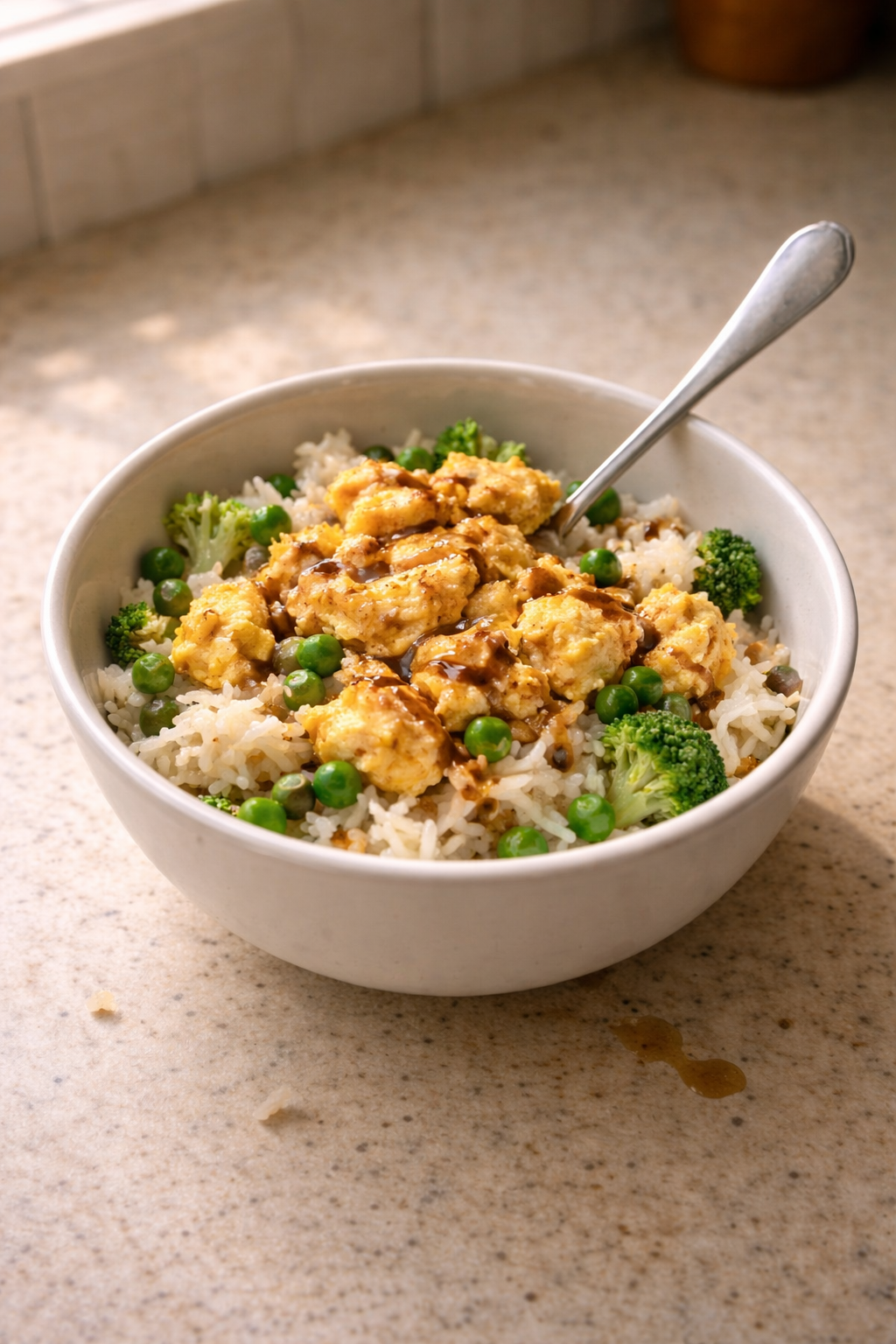
High-protein meals do not have to be expensive.
The cheapest protein sources are usually not trendy powders or oversized meat portions. They are the basics: eggs, beans, lentils, canned tuna, yogurt, peanut butter, and lower-cost cuts of meat used carefully.
When these ingredients are paired with rice, pasta, bread, or potatoes, it becomes much easier to build meals that are filling, practical, and affordable.
⚠️ Costs below are rough estimates based on typical U.S. budget grocery pricing. Exact prices vary a lot by region, brand, and sale timing.
What Makes a Cheap High-Protein Meal Work
The meals that usually stay under $2 per serving have a few things in common:
- they use protein sources that store well or repeat often
- they combine protein with low-cost starches
- they rely on overlapping ingredients
- they avoid buying specialty items for one recipe only
In practice, the goal is not perfection. It is having a small group of reliable, protein-forward meals you can repeat.
Low-Cost Protein Staples Worth Keeping Around
Here are the ingredients that usually do the most work for the money:
- eggs
- dried or canned beans
- lentils
- canned tuna
- peanut butter
- Greek yogurt or cottage cheese
- chicken thighs
- ground meat used in smaller amounts
- rice, oats, bread, potatoes, and pasta as low-cost bases
Quick Comparison
| Protein staple | Typical cost | Why it works |
|---|---|---|
| Eggs | low | flexible, quick, useful for any meal |
| Lentils | very low | high value, cook well in soups and bowls |
| Beans | very low | filling, easy to stretch into multiple meals |
| Canned tuna | low to moderate | convenient and high in protein |
| Greek yogurt / cottage cheese | moderate | useful for breakfasts and snacks |
| Chicken thighs | moderate | cheaper than breasts and more forgiving |
| Peanut butter | low | useful for adding protein, though usually best paired with other foods |
High-Protein Meal Ideas Under $2 Per Serving
Eggs over rice with vegetables
Eggs, rice, soy sauce, and frozen vegetables make one of the easiest budget protein meals.
Estimated cost: about $1–1.75 per serving
Why it works: fast, flexible, and built from pantry/freezer basics
Lentil soup
Lentils, onion, canned tomatoes, broth, and seasoning make a low-cost meal that scales well.
Estimated cost: about $0.75–1.50 per serving
Best use: dinner plus leftovers
Rice and beans bowl
Rice and beans are one of the most dependable low-cost meal bases.
Estimated cost: about $1–1.50 per serving
Tip: add salsa, egg, cheese, or hot sauce if available
Tuna pasta
Pasta, canned tuna, garlic, and canned tomatoes make a cheap, practical dinner.
Estimated cost: about $1–2 per serving
Best for: quick weeknight meals
Greek yogurt bowl with oats and fruit
More breakfast than dinner, but still one of the easiest low-cost protein meals.
Estimated cost: about $1–2 per serving
Tip: buy larger tubs when they are cheaper per ounce than single-serve cups
Chicken thigh rice bowl
Chicken thighs, rice, and vegetables stay budget-friendly when the meat is stretched across several servings.
Estimated cost: about $1.75–2 per serving, depending on sale pricing
Bean tacos or wraps
Beans, tortillas, and a simple topping or cheese can go a long way.
Estimated cost: about $1–1.75 per serving
Cottage cheese toast or bowl
Useful for breakfasts, lunches, or lighter meals.
Estimated cost: about $1–2 per serving
Note: works best when paired with fruit, toast, or oats
What Worked Best in Practice
The meals that tended to work best were not the ones with the most protein on paper.
They were the ones that:
- used ingredients already in the house
- could be cooked quickly
- made enough for leftovers
- were cheap enough to repeat without much thought
That is why eggs, lentils, beans, tuna, and chicken thighs tend to show up over and over in budget meal planning.
What Didn’t Work as Well
A few things made “cheap high-protein eating” more expensive than necessary:
- buying protein products or powders too early
- building meals around expensive cuts of meat
- buying ingredients for one recipe only
- assuming peanut butter or cheese alone would carry the protein target
Simple combinations worked better than over-engineered meals.
A Simple Formula for Building Cheap High-Protein Meals
A practical formula looks like this:
- Pick one protein source
- Add one low-cost base
- Add any vegetable you already have
- Season it well
Examples:
- eggs + toast + fruit
- lentils + rice + frozen vegetables
- tuna + pasta + tomatoes
- beans + tortillas + salsa
- chicken thighs + potatoes + carrots
That is usually enough.
Example Budget Meal Rotation
| Meal | Estimated cost per serving |
|---|---|
| Lentil soup | $0.75–1.50 |
| Eggs and rice | $1–1.75 |
| Rice and beans bowl | $1–1.50 |
| Tuna pasta | $1–2 |
| Chicken thigh bowl | $1.75–2 |
This is why protein on a budget is realistic: the same low-cost ingredients can support several meals in one week.
Pantry and Prep Tips
- Cook rice in batches
- Freeze cooked beans or lentils in portions
- Buy meat when discounted and freeze it
- Use canned fish in rotation so you do not get tired of it
- Keep a few fallback meals that need very little effort
FAQ
What is the cheapest high-protein food?
Eggs, lentils, beans, and peanut butter are usually among the cheapest protein-supporting staples, though actual value depends on local pricing.
Can I meal prep these meals?
Yes. Rice, beans, lentils, soups, and chicken thighs all work well for meal prep.
What if I do not like beans?
Use eggs, tuna, yogurt, cottage cheese, or chicken thighs instead.
How much protein do I need?
Protein needs vary. Nutrition labels use a Daily Value of 50 g for general reference, but personal needs can be higher or lower depending on body size, age, and activity level.
Can frozen vegetables work here?
Yes. Frozen vegetables are often cheaper, reduce waste, and fit well in most of these meals.
Related Reading
- Browse more recipes articles
- 15 Pantry Meals When You Have No Groceries (Real Meals from Staples You Already Have)
- 20 Dinner Ideas Under $5 Per Serving (Real Meals That Actually Work)
Conclusion
Cheap high-protein meals work best when they are simple enough to repeat.
You do not need expensive ingredients or complicated recipes. You need a small set of meals built around affordable protein sources that you already know how to use.
That is usually what makes high-protein eating sustainable on a budget: not perfection, just repeatable meals that actually fit real life.