You don’t hate meal planning.
You hate complicated systems that don’t survive a real week.
The kind with color-coded containers, perfect schedules, and 14 prepped meals lined up like a productivity competition.
That’s not what works.
What works is something you can do in 10 minutes, repeat every week, and not abandon the second life gets slightly messy.
This is that system.
The Only Goal of Meal Planning
Forget perfection.
The goal is simple:
Know what you’re eating most nights before you’re tired and hungry.
That’s it.
Because the expensive decisions happen at 6:15 PM — not at the grocery store.
Why Most Meal Plans Fail
Most advice assumes you want to become “a planner.”
You don’t.
You want:
- fewer last-minute grocery runs
- less food waste
- fewer “what are we eating?” conversations
- lower spending
Meal plans fail because they try to solve everything:
- breakfast
- lunch
- snacks
- 7 dinners
- prep schedules
That’s too much.
A working system only needs:
- 5 dinners
- 1 short grocery list
- 10 minutes of setup
The “Boring Five” Method
This is the core system.
Pick five meals you already eat.
Not new recipes. Not aspirational meals.
Meals you’ve made before without thinking.
Example:
- Spaghetti with meat sauce
- Rice and beans
- Chicken thighs with potatoes
- Eggs and toast (yes, this counts)
- “Use-it-up” soup or leftovers
Cost: roughly $1–2.50 per serving
Why this works:
- No learning curve
- No decision fatigue
- No risk of failure
You’re not planning perfect meals.
You’re removing decisions.
Build Your Grocery List in 5 Minutes
Don’t overthink this.
Go meal by meal and scan:
Spaghetti
- Pasta? ✔
- Sauce? ✔
- Meat? ❌ → add it
Rice + beans
- Rice? ✔
- Beans? ❌ → add
- Vegetables? optional
Repeat for all five meals.
Done.
No templates. No formatting.
If you want a structured version of this approach,
see Budget Grocery List for a Tight Week
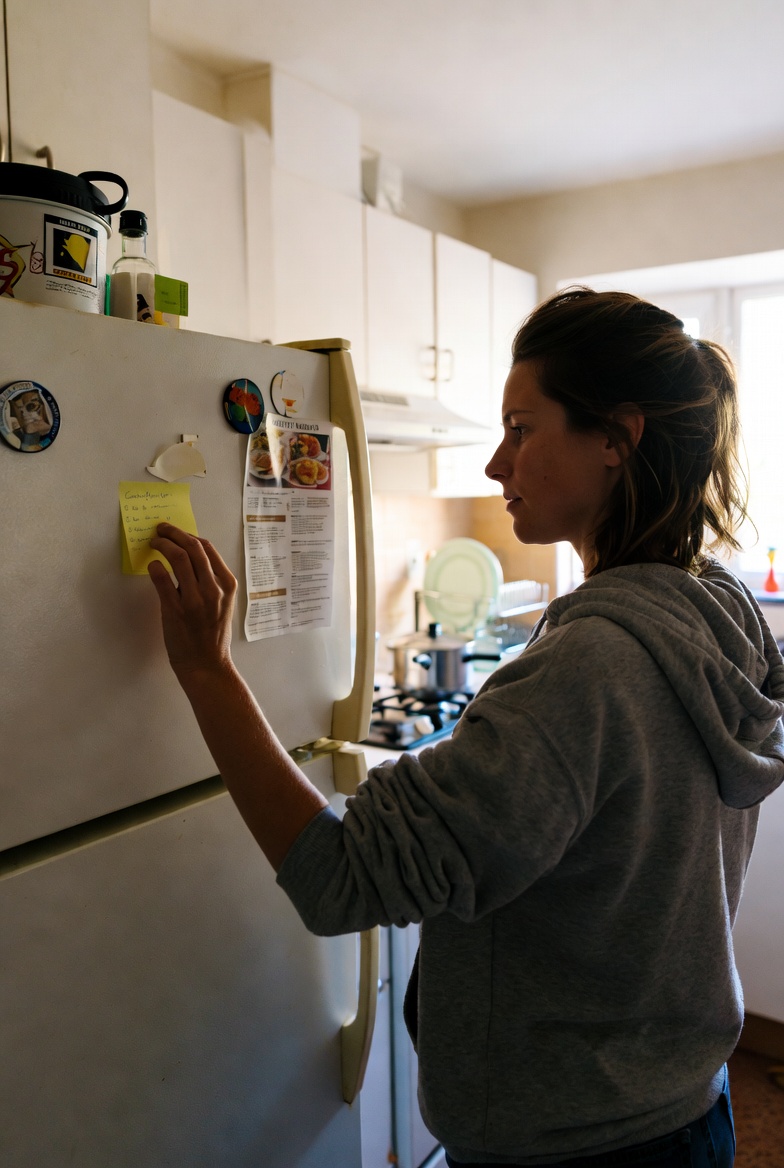
The Fridge Note System (This Is the Secret)
Write your five meals on a note.
Put it on your fridge.
Each night:
- look at the list
- pick one
- cross it off
Important:
You do not assign meals to specific days.
Why this matters:
Rigid plans break.
Flexible lists don’t.
You still choose each night —
but from 5 options instead of 500.
That’s the difference.
What About Breakfast and Lunch?
Ignore them at first.
Breakfast:
- oats
- toast
- eggs
- yogurt
That’s already a system.
Lunch:
- leftovers
- simple defaults (sandwich, rice, eggs)
Trying to plan everything is what causes failure.
Dinner is where:
- most money is spent
- most stress happens
Solve that first.
The One Rule That Makes This Work
Always cook one extra serving.
That’s it.
That extra portion becomes:
- lunch tomorrow
- or a no-cook night later
Why this matters:
- saves $10–20/week quietly
- reduces cooking frequency
- creates built-in backup meals
This is also how systems like
Frugal One-Pot Dinners Under 5 Dollars scale so well.
When the Plan Falls Apart (Because It Will)
You’ll:
- forget ingredients
- get home late
- order takeout once
That’s normal.
The plan is not strict — it’s a fallback system.
If you use:
- 3 out of 5 meals
You’re already ahead.
Less waste. Less spending. Less stress.
For backup nights, keep
Pantry Meals When You’re Broke in your rotation.
Your 10-Minute Setup (Week One)
Step 1: Pick 5 meals
Step 2: Check ingredients
Step 3: Write a short list
Step 4: Shop once
Step 5: Put meals on fridge
Total time: ~10 minutes
That’s less time than scrolling delivery apps.
Why This System Actually Saves Money
Not because you optimize ingredients.
Because you eliminate:
- impulse grocery trips
- takeout decisions
- wasted food
- decision fatigue
Most people save: $25–40 per week
Without changing what they eat.
Keep Going
If you want to improve your system over time:
- Build a stronger base → How to Stock a Frugal Pantry from Scratch
- Reduce grocery waste by planning meals around what you already have
FAQ
Do I need an app?
No. A fridge note works better because you’ll actually see it.
How much can I save?
Typically $25–40 per week from reduced waste and impulse spending.
What if I get bored?
Swap 1–2 meals every couple of weeks.
Does this work for families?
Yes — especially because kids prefer repetition.
What if I skip days?
That’s fine. The system is flexible on purpose.
Related Reading
Conclusion
Meal planning doesn’t need to be a personality trait.
It just needs to be simple enough to repeat.
Five meals. One list. A note on your fridge.
That’s enough to:
- lower your grocery bill
- reduce stress
- and make dinner easier every night
Try it once.
If it works, you’ll keep doing it — not because you “should,” but because it actually makes your life easier.