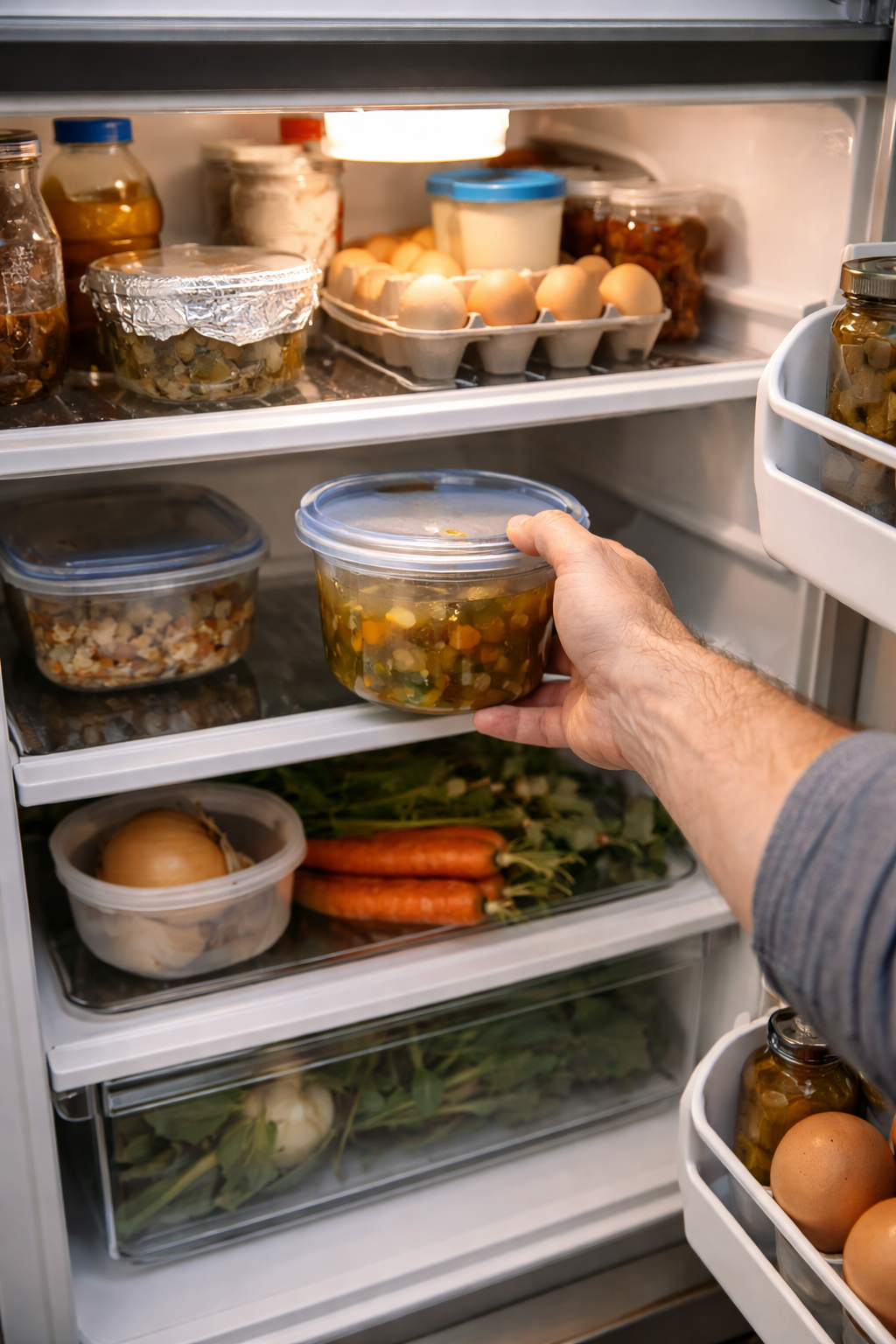
The bag of spinach bought with good intentions on Monday turns into brown sludge by Friday. The leftover chili disappears behind the milk. The half-used bottle of cleaner under the sink sits next to another half-used bottle nobody remembered buying.
That kind of waste rarely feels dramatic in the moment. It just shows up as groceries that never get eaten, duplicate purchases, and small weekend spending that keeps leaking out of the budget.
USDA says the average American family of four loses about $1,500 a year to uneaten food alone. That does not even include duplicate household purchases, overlapping cleaning products, or convenience spending that happens when the house feels disorganized. A few small routines can make a noticeable difference.
This is not a zero-waste overhaul. It is a short set of habits that reduce the kinds of waste most households run into every week.
Where household waste usually hides
Household waste often shows up in a few repeat areas:
- food spoilage
- forgotten leftovers
- duplicate pantry or cleaning purchases
- unplanned weekend spending
- convenience spending caused by disorganization
The biggest issue is usually not one giant mistake. It is a series of small ones that repeat.
Routine 1: The Sunday fridge check
A five-minute fridge check before shopping can prevent a surprising amount of waste.
What to do
- move items that need to be eaten soon to the front
- throw out anything that is clearly gone
- check what is already there before writing the grocery list
A quick photo of the fridge before shopping can help too. The point is visibility.
Why it works
Food is much more likely to get used when it is easy to see. This routine also reduces duplicate grocery purchases.
Routine 2: One “use-it-up” dinner each week
Instead of treating leftovers as random extras, give them one planned place in the week.
What this can look like
- leftover rice + eggs + frozen vegetables = fried rice
- leftover chicken + tortillas = quesadillas
- leftover pasta + tomato sauce + cheese = baked pasta
- older vegetables + broth + beans = soup
Why it works
It lowers waste and also replaces one future meal that would otherwise require more groceries.
Routine 3: The 60-second pantry scan
Before shopping, open the pantry and look for what you already have.
Not inventory. Not organizing. Just a fast scan.
Why it works
A lot of duplicate purchases happen because people shop from memory. Pasta, flour, canned beans, soy sauce, rice, and baking staples are common repeat buys simply because they were not visible.
Keeping the most-used items at eye level helps, but the bigger win is just looking before shopping.
Routine 4: Simplify cleaning products
Many households buy too many overlapping cleaning products.
A simpler setup often works better:
- dish soap
- white vinegar
- baking soda
- one all-purpose spray
Why it works
This reduces duplicate buying and cuts down on the pile of half-used specialty products under the sink.
Practical note
Different surfaces still need care, so always check manufacturer guidance for delicate materials. But for ordinary day-to-day cleaning, simple basics usually cover more than people think.
Routine 5: Make a weekend spending plan
Weekend spending often drifts because nobody names the plan before the weekend starts.
A short list helps:
- what errands actually need to happen
- whether meals are at home or out
- whether there is one planned paid outing or none
- what the family is doing instead of “just going out”
Why it works
Unplanned errands and “while we’re out” spending are where a lot of money disappears. A little structure usually saves more than strict rules.
What worked best in practice
The routines that tend to stick are the ones that:
- take less than 10 minutes
- fit into something you already do
- reduce decisions instead of adding more work
- help during busy weeks, not just ideal ones
That is why the fridge check, pantry scan, and weekend list are so useful. They do not require a big lifestyle reset.
What usually does not work
A few approaches tend to fail:
- trying to organize the whole house at once
- buying containers and systems before fixing habits
- trying to eliminate all waste immediately
- making the routine so strict that people stop doing it
A smaller routine that survives busy weeks is more valuable than a bigger system that collapses after one month.
A simple weekly rhythm
Here is one low-effort way to use these ideas:
| Day | Routine |
|---|---|
| Sunday | fridge check + grocery list |
| Before shopping | 60-second pantry scan |
| Midweek | use-it-up dinner |
| Saturday morning | short weekend spending plan |
| Once as needed | simplify cleaning supplies |
This is enough structure for most households.
Why this matters financially
Waste does not only show up in the trash.
It also shows up as:
- groceries bought twice
- takeout ordered because the kitchen feels chaotic
- items expiring before anyone remembers them
- extra weekend purchases made without a plan
The financial benefit comes from reducing those repeated leaks, not from perfection.
Keep going
If food waste is the easiest place for your household to start, Pantry Meals When You’re Broke fits naturally with these routines.
If weekends are where spending drifts most, Free Date Nights and No-Spend Weekend Ideas pairs well too.
FAQ
What is the easiest routine to start with?
The fridge check. It is short, easy to repeat, and helps with both waste and grocery planning.
Does reducing household waste really save money?
Usually yes. Food waste alone can be significant, and reducing duplicate purchases and unplanned spending adds even more over time.
Do I need to buy containers or organizing products first?
No. Better visibility and repeatable habits matter more than storage products.
What if my house already feels chaotic?
Start with one routine only. The fridge check is usually the easiest place to begin.
Related Reading
Conclusion
Household waste is usually not one big problem. It is a slow leak made of spoiled food, duplicate purchases, and unplanned spending that keeps happening because nobody set up a simple system to catch it.
A few routines can fix a lot of that. Not perfectly, but enough to make the week easier and the budget steadier.