Easy Leftover Roast Chicken Recipes Using Pantry Staples
Leftover roast chicken is one of the easiest ways to make a second meal feel cheaper without making it feel like a compromise. The expensive part of the meal is often already done. Once the chicken is cooked, the next step is not buying a whole new dinner. It is using pantry staples to stretch that cooked meat into soups, wraps, bowls, pasta dishes, and quick weeknight meals that still feel complete.
This is where leftovers become genuinely useful instead of just sitting in the refrigerator while everyone hopes somebody else will deal with them. A small amount of roast chicken can go surprisingly far when it is paired with rice, pasta, beans, canned tomatoes, broth, tortillas, oats, potatoes, or frozen vegetables.
If you want the broader recipe cluster first, start with the Recipes category archive. This topic also connects directly to Cheap Pantry Meals for Families, because pantry planning is what turns a leftover protein into a real dinner instead of a random snack plate.
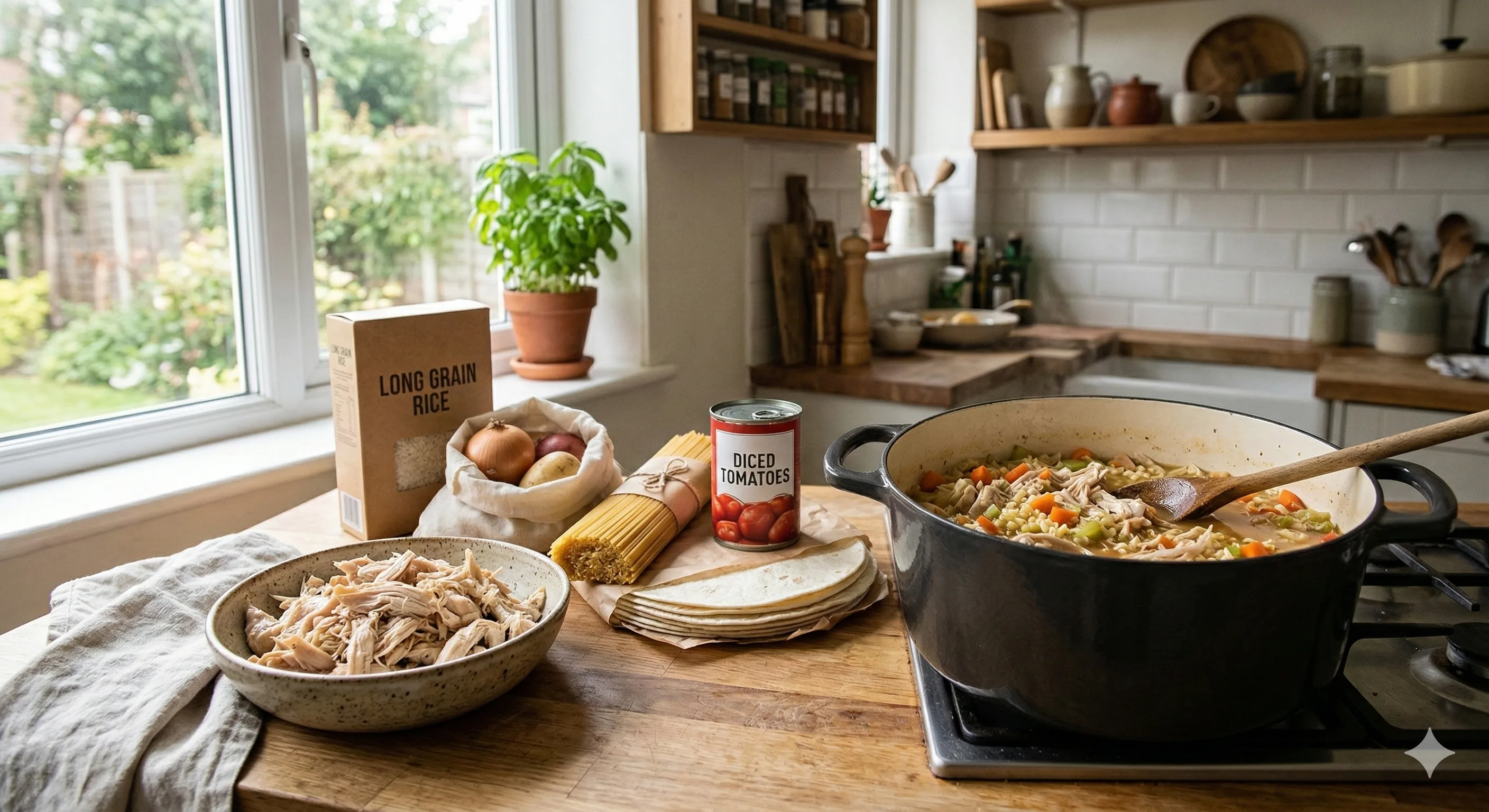
Leftover roast chicken and pantry staples ready for an easy second meal.
Why leftover roast chicken works so well for budget cooking
Leftover roast chicken helps for a simple reason: it shortens the path to the next meal. The protein is already cooked, which means the second meal usually needs less time, less energy, and fewer ingredients.
That matters on busy nights. A household is much more likely to overspend when dinner still feels far away at six o’clock. Cooked chicken lowers that barrier.
It also helps with portion stretching. A roast chicken that might not look large enough for another full centerpiece meal can still become:
- Chicken and rice soup
- Pasta with chicken and peas
- Chicken wraps or quesadillas
- Chicken fried rice
- Chicken and bean bowls
The goal is not to create a perfect replica of the original roast dinner. The goal is to get another satisfying meal from what is already paid for.
Pantry staples that pair best with leftover chicken
Leftover chicken becomes much more valuable when the pantry keeps a few dependable supporting ingredients around.
Useful pantry staples include:
- Rice
- Pasta
- Canned beans
- Canned tomatoes
- Tortillas
- Broth or bouillon
- Oats
- Frozen vegetables
- Potatoes
- Onion
- Garlic powder
- Soy sauce
- Shredded cheese or another small flavor booster
Most of these already appear in low-cost meal systems like How to Stock a Frugal Pantry From Scratch. That overlap matters, because the cheapest leftover strategy is usually the one that depends on foods you already keep buying.
Easy leftover roast chicken recipes to rotate
Chicken and rice soup
Soup is one of the easiest ways to stretch a small amount of chicken. Start with onion, broth, rice, and frozen vegetables, then stir in shredded chicken near the end so it warms through without drying out.
This works especially well when the roast chicken came with any drippings or extra flavor from the first meal. Even a modest amount of chicken can flavor a whole pot of soup when the broth and rice do the rest of the work.
Chicken tomato pasta
Pasta, canned tomatoes, onion, garlic powder, and shredded chicken make a very practical second meal. The chicken does not need to dominate the dish. It just needs to show up in enough bites that dinner still feels substantial.
This works best when the pasta sauce is simple. The leftover chicken is already bringing flavor, so you do not need a long ingredient list to make the meal feel finished.
Chicken fried rice
Fried rice is one of the strongest leftover meals because it was practically designed for odds and ends. Leftover rice, frozen vegetables, egg, soy sauce, and chopped chicken can become dinner in one pan with very little cleanup.
This is also one of the easiest ways to turn a small amount of chicken into a meal for several people, because the rice and vegetables carry so much of the volume.
Chicken and bean wraps
Tortillas, canned beans, leftover chicken, and a little cheese or salsa can become wraps, burritos, or quesadillas. This is useful when the household wants a dinner that feels different from soup or pasta without requiring a full cooking project.
The same filling can also become rice bowls if tortillas are not available. That kind of flexibility is what makes leftovers easier to use consistently.
Chicken potato skillet
Cook potatoes and onions in a skillet, add any vegetables you have, then stir in chopped chicken near the end. This is one of the better options for using leftover roast chicken when the pantry is low but you still want a hot, hearty meal.
Potatoes do a lot of work in low-cost cooking because they make a meal feel grounded and filling without adding much cost.
Chicken noodle casserole shortcut
If you have pasta, frozen vegetables, a simple sauce base, and leftover chicken, you can turn them into a baked dish that feels more intentional than “leftovers again.” This can be especially helpful for families, because baked pasta or casserole-style meals often read as a normal dinner rather than a reused meal.
How to stretch a small amount of chicken further
The easiest way to make leftovers more useful is to stop treating the chicken as the whole meal. Let it be part of the meal instead.
A few practical ways to do that:
- Shred it finely so it spreads more evenly
- Pair it with starch and vegetables
- Use stronger seasonings so the dish feels complete
- Build around texture and volume, not meat quantity alone
This is the same logic that makes topics like frugal one pot dinners under 5 dollars work. The most repeatable cheap dinners are usually the ones that do not rely on large amounts of protein to feel satisfying.
A simple leftover chicken meal plan
One roast chicken can often support more than one follow-up meal if the portions are handled deliberately.
For example:
- First meal: roast chicken dinner
- Second meal: chicken and rice soup
- Third meal: chicken fried rice or wraps
That kind of sequence is useful because each meal changes format. The family is not simply reheating the same plate again and again. Format change is often the difference between a leftover feeling practical and a leftover feeling unwanted.
It also reduces waste. Chicken that is turned into a plan on purpose is much more likely to be used than chicken kept in the refrigerator with no clear job attached to it.
Common mistakes with leftover roast chicken
Waiting too long to decide what it will become
Leftovers are easiest to use when the next meal is chosen quickly. If the chicken has no clear purpose, it is more likely to be forgotten.
Expecting it to make a full meat-heavy dinner again
That can work sometimes, but it is usually not the best value. Stretching is more effective than repeating.
Forgetting pantry support
Cooked chicken alone is not a meal plan. The pantry makes the second meal possible. Rice, tortillas, pasta, broth, beans, and frozen vegetables are what turn leftovers into dinner.
Using too many extra ingredients
A leftover meal should reduce spending, not quietly become another expensive recipe. Start simple. Add complexity only if the pantry already supports it.
How leftover chicken supports the grocery budget
Leftover cooking is not just about avoiding waste. It also changes how the week feels. When one cooked protein can cover more than one dinner, the grocery trip gets more breathing room. That pressure relief matters because grocery overspending often happens when the week has too few fallback meals.
This is why leftover meals pair well with practical shopping systems like Budget Grocery List for a Tight Week. A short grocery list works better when it assumes that one cooked item can help more than once.
The budget win is often indirect. You save money not only because the second meal costs less, but because you avoid the last-minute replacement meal that would have cost much more.
Making leftover chicken meals work for families
Families usually need a leftover meal to feel familiar before they will repeat it without complaints. That is one reason soup, pasta, wraps, bowls, and skillet meals work so well. The format already feels normal.
It also helps to keep the meal visually distinct from the original roast dinner. Roast chicken on night one and chicken fried rice on night two do not feel repetitive in the same way that roast chicken with the same sides would.
When the chicken amount is limited, combine it with one or two dependable bulk ingredients and keep the seasoning clear. A meal can feel generous even when the meat portion is moderate if the structure of the meal is solid.
FAQ
What can I make with leftover roast chicken and pantry staples?
Some of the easiest options are soup, pasta, fried rice, wraps, potato skillets, and bean bowls. These meals work because the pantry carries most of the volume.
How long should leftover roast chicken stay in the refrigerator?
Use normal household food-safety common sense and plan the next meal soon. Leftovers are easiest to use well when they are assigned to a second meal quickly.
What is the cheapest way to stretch leftover chicken?
Soup, fried rice, and wraps are usually among the strongest options because they pair a small amount of chicken with inexpensive pantry ingredients that add volume.
How do I keep leftover chicken from tasting dry?
Add it near the end of cooking when possible, and use it in dishes with sauce, broth, or another source of moisture.
Conclusion
Easy leftover roast chicken recipes using pantry staples work because they turn one cooked dinner into a small meal system. When soup, pasta, wraps, rice, and skillet meals are built from ingredients already in the kitchen, leftovers stop feeling accidental and start feeling useful. That is usually where the real savings happen: less waste, fewer emergency grocery runs, and one more reliable dinner already half solved.