Buying secondhand furniture is often worth it — but not for every category and not for every buyer.
The strongest case for buying used is simple: many secondhand pieces cost far less than new furniture, and solid older furniture often holds up better than a lot of new budget flat-pack options. There is also a waste angle. EPA says Americans generated 12.1 million tons of furniture and furnishings waste in 2018. :contentReference[oaicite:0]{index=0}
The mistake is assuming all used furniture is a bargain. Some categories are excellent secondhand buys. Others are worth more caution.
Why used furniture is often the better deal
Used furniture usually makes the most sense when you are buying items that are:
- structurally simple
- expensive to buy new
- easy to inspect in person
- made from solid wood or metal
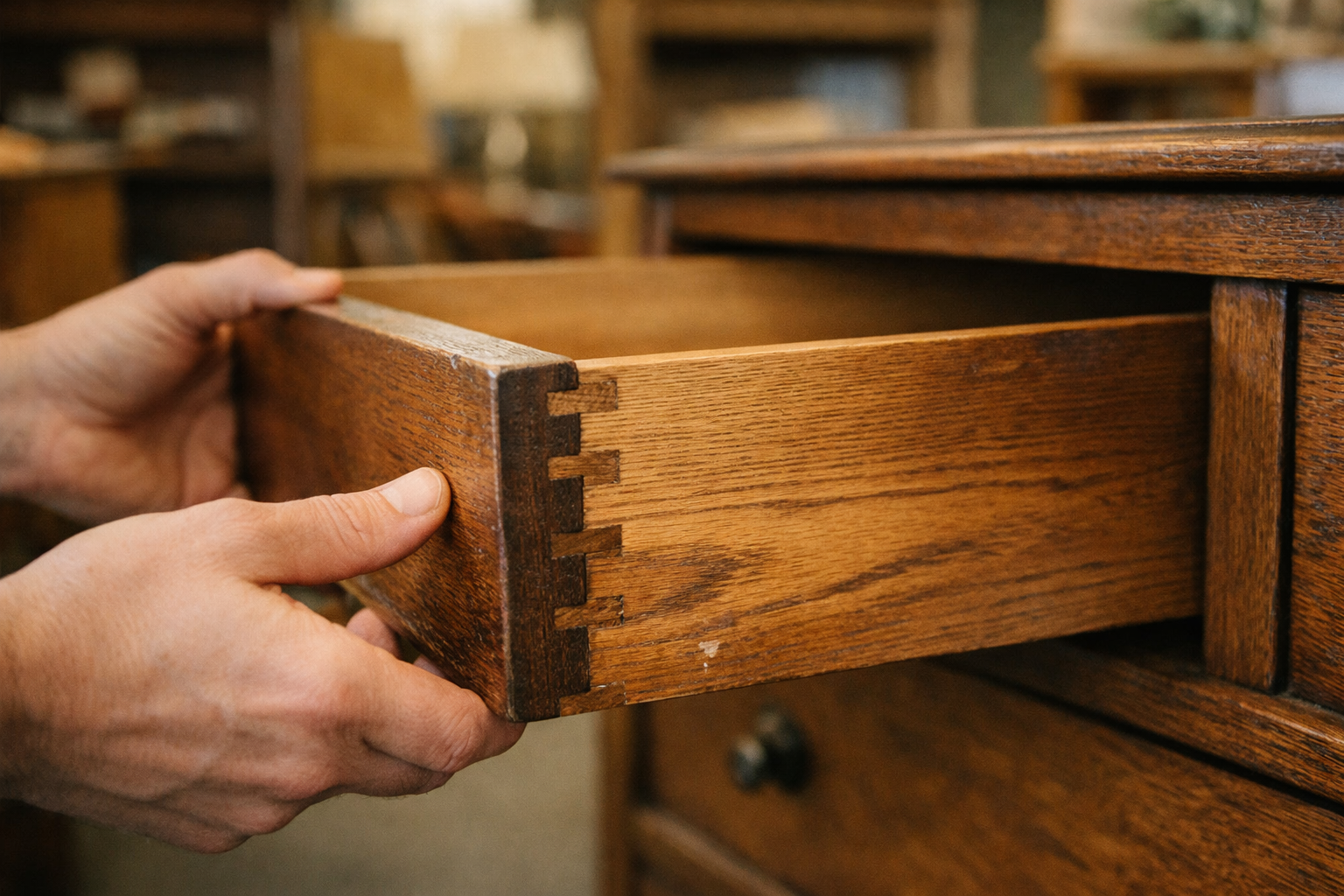
That is why dressers, dining tables, bed frames, bookshelves, and side tables are often great used purchases. They do not rely on hidden foam, hidden springs, or internal parts that are hard to evaluate.
The other big advantage is price pressure in the resale market. The secondhand furniture market is large and still growing, which means buyers now have more options through local resale, thrift, and online marketplaces than they did a decade ago. One market report estimated the global secondhand furniture market at $34.01 billion in 2023. :contentReference[oaicite:1]{index=1}
Why some used pieces outperform new budget furniture
Not all “new” furniture is automatically better.
A lot of low-cost new furniture is made from particle board or MDF. Those pieces can be fine for some uses, but they are more vulnerable to swelling, chipping, and joint failure over time, especially if they are moved often or exposed to moisture. In contrast, an older solid-wood dresser or table can often be tightened, refinished, repainted, or repaired.
That is the part many people miss: used furniture is often a better materials buy, not just a cheaper one.
The environmental case is real too
The environmental argument for buying used is strong even without exaggerated numbers.
EPA’s durable goods data shows that furniture waste is a major waste stream in the U.S., with 12.1 million tons generated in 2018. :contentReference[oaicite:2]{index=2}
Buying used does not erase all environmental impact, but it usually extends the life of an item that already exists instead of creating demand for another new piece. That is one reason reuse matters in practice even if you are shopping mainly for budget reasons.
What used furniture is usually worth buying
Solid wood tables and dressers
These are often the best-value secondhand finds because they are durable, easy to inspect, and often easy to refresh cosmetically.
Metal bed frames
A used metal frame often works just as well as a new one if it is structurally sound and all hardware is included.
Bookshelves and shelving units
These are simple, visible, and usually easy to assess for stability and wear.
Dining chairs
Used chairs can be a good buy if joints feel tight and the seat structure is still solid.
Side tables, coffee tables, and storage pieces
These are often among the safest secondhand purchases because they are straightforward and easy to examine.
What to be more careful with
Upholstered sofas and armchairs
These can still be good used buys, but they are riskier because wear is harder to assess and pests or odor issues are easier to miss.
Mattresses
This is usually a buy-new category for hygiene and quality reasons.
Particle board furniture with visible damage
If MDF or particle board is already swollen, crumbling, or delaminating, it is usually not worth the trouble.
Children’s furniture
Be especially careful with used cribs, high chairs, and similar items. CPSC maintains an active recall database, and used children’s products should always be checked against it before purchase. :contentReference[oaicite:3]{index=3}
What to check before you buy
A quick inspection catches most bad purchases.
Look for:
- wobbling or loose joints
- drawer slides that stick badly
- cracks in structural areas
- water damage or swelling
- strong odor, mold, or visible pest signs
- missing parts or hardware
- dimensions that do not fit your space
For upholstered items, inspect seams, undersides, and hidden corners carefully.
When used furniture is usually not worth it
Used furniture is often a bad buy when:
- repairs cost more than the item is worth
- the piece is damaged in a way that affects function
- it only seems cheap because it is already near the end of its life
- transport costs wipe out the savings
- it does not actually fit your space or use case
That last point matters. A “deal” that does not fit through the door or solve the right problem is not a deal.
Where secondhand furniture is easiest to shop
The most practical places are usually:
- Facebook Marketplace
- local thrift stores
- Habitat ReStore
- estate sales
- Craigslist or OfferUp
The best source depends on what you need. Marketplace tends to be strongest for larger pieces. Thrift stores are often better for smaller wood furniture, chairs, lamps, and decor.
What worked best in practice
The strongest secondhand buys are usually the boring ones:
- a dresser that is heavy and functional
- a sturdy dining table
- a bookshelf that does not wobble
- a bed frame that just works
Those pieces usually give the best mix of savings, quality, and low risk.
What did not work as well
The riskiest used purchases were usually the ones that looked good in photos but were harder to judge in real life:
- upholstered seating
- damaged particle board pieces
- trendy low-quality furniture that was not built well to begin with
- children’s furniture without a safety check
FAQ
Is it safe to buy a used mattress? Generally no. Mattresses can harbor bed bugs, allergens, and hidden wear that is difficult to inspect. A new budget mattress is usually a safer investment.
What is the best place to find quality secondhand furniture? Estate sales and local marketplace listings tend to have the best selection. Thrift stores can work too, but the quality varies more and turnover is unpredictable.
How do I check if a used piece is solid wood vs. particle board? Look at the edges and underside. Solid wood shows grain on all sides. Particle board is smooth with a thin veneer on top and visible compressed material underneath.
Conclusion
Yes, secondhand furniture is often worth buying used.
It tends to make the most sense for solid wood, metal, and simple structural pieces where condition is easy to inspect. It makes less sense for items with hidden wear, hygiene concerns, or safety risks.
The best rule is simple: buy used when the quality is visible, the structure is sound, and the savings are still real after transport and cleanup.