Small spaces don’t need more storage products.
They need fewer things in smarter places.
That’s the shift that actually works — and once you see it, you stop buying bins and start solving the real problem.
If you’re working with a small apartment, limited storage, and a tight budget, this approach is built for real life — not Pinterest.
Start by removing what doesn’t earn its space
Before organizing anything, do a quick, honest pass.
In a small space, every item costs you square footage.
If something:
- hasn’t been used in 6+ months
- doesn’t make your life easier
- doesn’t make you genuinely happy
…it’s taking up space you need.
This isn’t minimalism. It’s practicality.
Most people gain more usable space from decluttering than from buying storage.
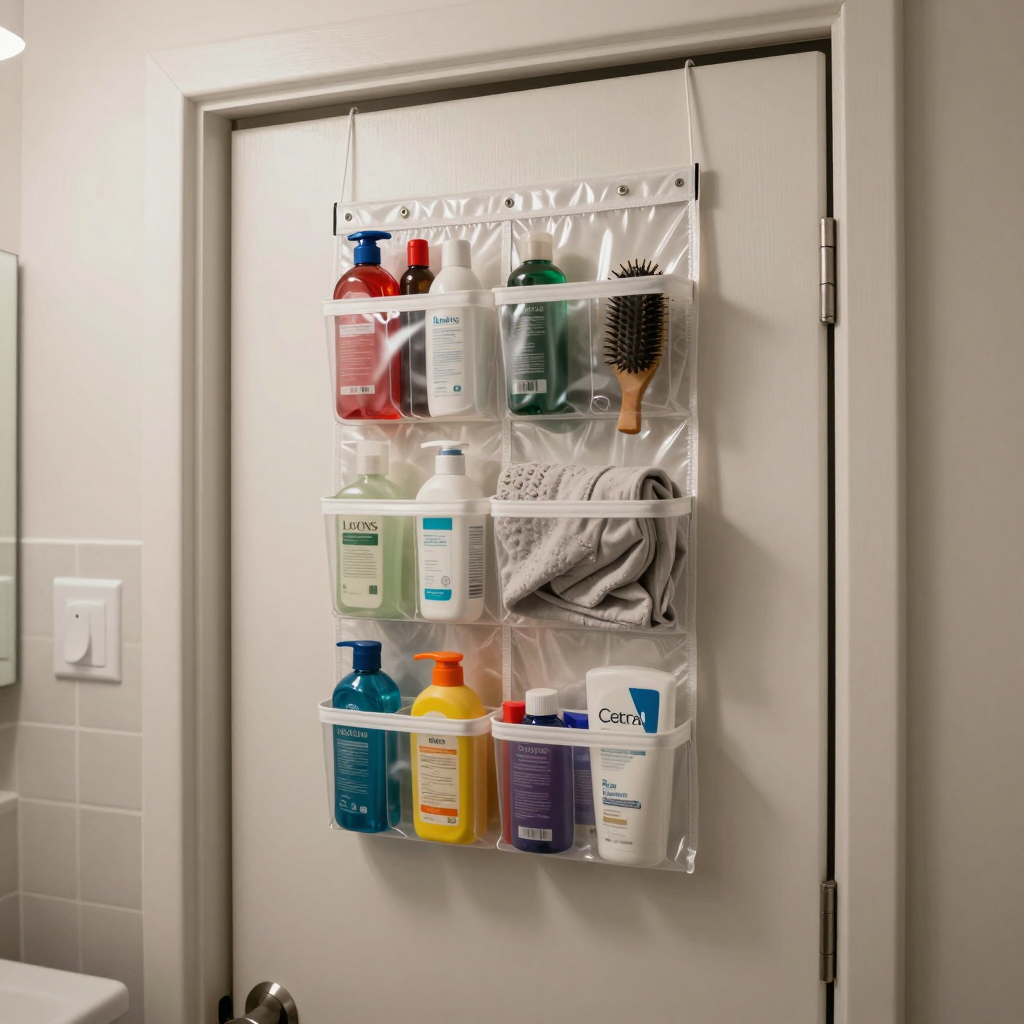
Use the back of every door
Doors are hidden storage walls.
An over-the-door organizer instantly creates space without using your floor or walls.
Use it for:
- bathroom items
- pantry overflow
- cleaning supplies
- accessories or small items
Add a few over-the-door hooks and you’ve solved:
- coats
- bags
- towels
- robes
No drilling. No damage. Perfect for rentals.
Go vertical (this changes everything)
Small spaces run out of floor first — not walls.
Look up.
If there’s empty wall space, you have unused storage.
Simple, cheap options:
- floating shelves
- hooks
- tension rods
- wall-mounted racks
Use vertical space for:
- kitchen items
- toiletries
- books
- everyday essentials
You’re not adding stuff — you’re relocating it to better space.
Use tension rods and hooks creatively
These are some of the highest-impact, lowest-cost tools.
Tension rods
- inside cabinets → double storage
- under sinks → hang spray bottles
- closets → create extra hanging rows
Hooks
- keys by the door
- mugs under cabinets
- bags and hats on walls
- jewelry in bedrooms
They solve small problems instantly — without taking up space.
Give everything a home
Clutter isn’t always about too much stuff.
It’s usually about things having no assigned place.
If something doesn’t have a home:
- it lands on counters
- becomes a pile
- turns into background clutter
Simple fixes:
- tray for keys and wallet
- basket for remotes and chargers
- small bin for daily-use items
When everything has a home, cleanup becomes automatic.
Use furniture that does more than one job
In a small space, furniture has to work harder.
Look for (or repurpose):
- storage ottomans
- beds with under-bed space
- nightstands with drawers
- shelves that divide rooms
Even simple upgrades like bed risers can create:
- seasonal storage
- clothing space
- extra room for bins
The goal: every piece earns its place twice.
One in, one out (this keeps everything working)
This habit matters more than any product.
Every time something new comes in: → something else leaves
That’s it.
It prevents:
- slow clutter buildup
- overfilling storage
- constant reorganization
And it keeps your space stable long-term.
Focus on the kitchen first
Small kitchens create the most stress — and the most clutter.
Low-cost fixes that make a big difference:
- stack dishes vertically with shelf inserts
- hang knives instead of storing them
- use rods under the sink
- hang mugs instead of stacking
- add a narrow rolling cart
But the biggest win?
Remove what you don’t use.
Most kitchens are full of:
- duplicates
- unused gadgets
- “just in case” tools
Clearing those out creates more space than any organizer.
A realistic budget (optional, not required)
You don’t need to buy everything — but if you do:
| Item | Cost |
|---|---|
| Door organizer | $10 |
| Hooks | $4 |
| Shelves (2) | $24 |
| Tension rod | $6 |
| Small tray | $2 |
| Bed risers | $12 |
| Kitchen insert | $6 |
| Knife strip | $10 |
| Total | ~$70–85 |
You can also do most of this for $0 using what you already have.
What actually makes a small space feel bigger
It’s not:
- matching containers
- perfect systems
- expensive storage
It’s:
- fewer items
- clear surfaces
- easy-to-maintain systems
That’s what reduces stress.
FAQ
Do I need to buy storage to organize a small space?
No. Start by removing what you don’t use. Most organization problems are solved by having less, not storing more.
What are the cheapest organizing tools?
Hooks, tension rods, and door organizers. They offer the most impact for the least money.
How do I keep things from getting messy again?
Follow one rule: one in, one out. It prevents buildup without needing constant resets.
What’s the biggest mistake in small spaces?
Buying storage before decluttering. You end up organizing things you don’t actually need.
How do I organize without making it complicated?
Keep it simple:
- everything has a home
- everything is easy to reach
- nothing is hidden behind clutter
Related Reading
- Browse more frugal home articles
- Cheap Ways to Make a Rental Feel Cozy (Renter-Friendly Ideas That Actually Work)
- DIY Cleaning Products With Baking Soda and Pantry Staples (Simple Frugal Cleaning That Actually Works)
Conclusion
Organizing a small space isn’t about adding more systems.
It’s about:
- removing what doesn’t matter
- using space more intentionally
- making everyday items easier to access
Start small.
Clear one area. Add one fix. Build one habit.
That’s how small spaces stop feeling small.