Last winter, a friend of mine opened her electric bill and almost didn’t want to look at it. $187 for a two-bedroom apartment. Nothing unusual was happening — just heat, lights, laundry, and everyday life.
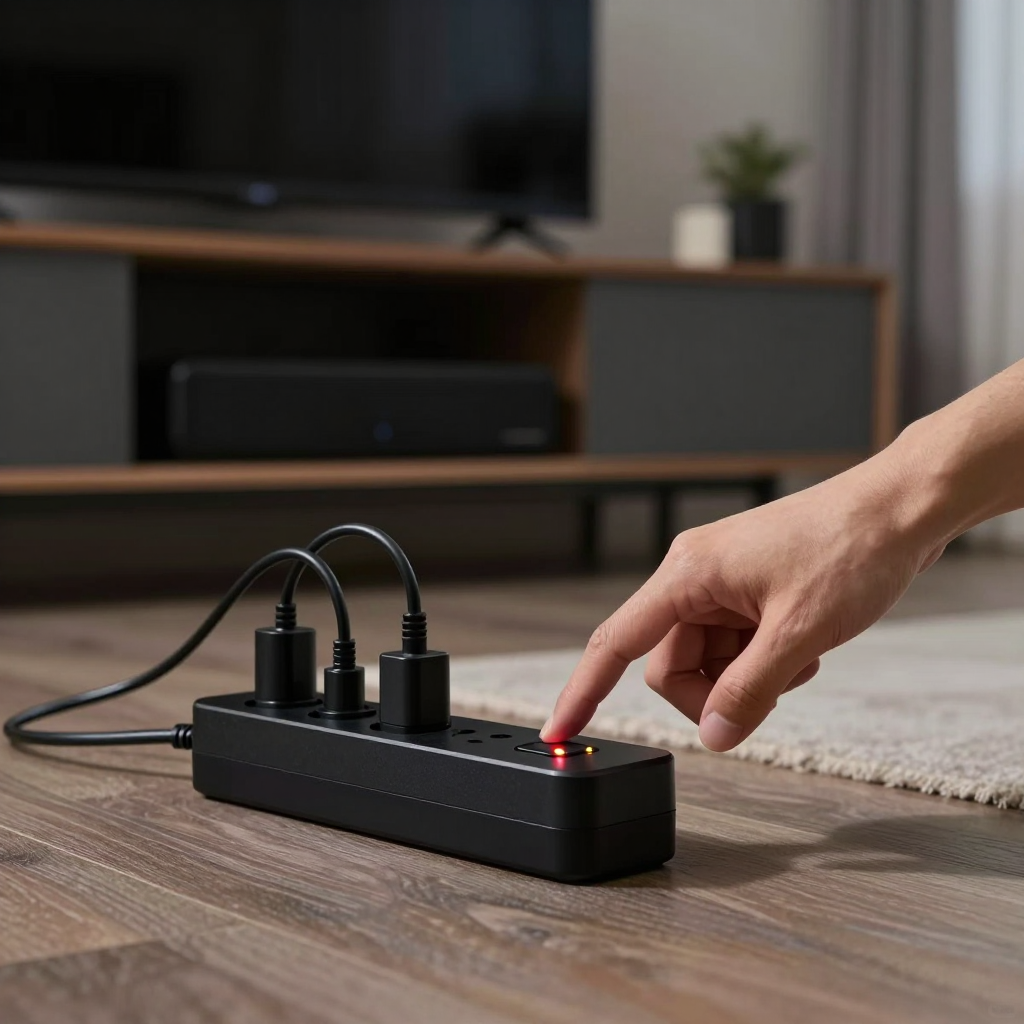
Then she made one small change: she added smart power strips to her entertainment center and home office.
The result wasn’t dramatic overnight magic, but it was noticeable. Her next bill dropped by about $30 — and stayed lower in the months after.
That’s the switch. But the real takeaway is what it reveals: a lot of your electric bill comes from small, mostly invisible waste.
If you want the bigger picture on lowering home costs, the Frugal Home category archive connects this with routines like DIY Cleaning Products With Baking Soda and Weekly Home Reset Routine on a Budget.
Why Smart Power Strips Actually Help
Most homes have devices that keep using electricity even when they’re “off.”
TVs, game consoles, monitors, printers, and streaming devices all draw standby power. This is often called phantom load, and it typically accounts for around 5–10% of total household electricity use.
A smart power strip solves this by cutting power to secondary devices when the main device turns off.
For example:
- Turn off your TV → the strip cuts power to the console, soundbar, and streaming box
- Shut down your computer → monitors and accessories stop drawing power
A basic smart strip costs $20–$35. In homes with a lot of electronics, the savings can be noticeable — sometimes $10–$30/month depending on usage.
The key is placement. One strip in the right spot does more than five scattered around the house.
Turn Down the Water Heater (Quick Win)
Most water heaters are set higher than necessary.
Dropping the temperature to around 120°F (49°C):
- reduces energy use by roughly 6–10% for water heating
- lowers the risk of burns
- usually doesn’t affect daily comfort
For many households, that’s around $5–15/month in savings depending on usage.
It takes two minutes and costs nothing.
Replace Only the Bulbs That Matter
You don’t need to replace every light in your home.
Focus on the 4–6 bulbs you use the most:
- kitchen
- living room
- bathroom
- bedside lamp
Switching those to LED reduces energy use significantly because LEDs use about 70–80% less electricity than older incandescent bulbs.
This is a small change, but it compounds over time — especially in rooms where lights stay on for hours.
Use Curtains as Temperature Control
Curtains aren’t just decoration. They’re part of your heating and cooling system.
- Winter: close them at night to keep heat in
- Summer: close them during the day on sunny windows to block heat
Even regular curtains help. Thermal curtains just make the effect stronger.
This works best when you treat it like a routine:
- open in the morning
- close at night
No cost — just consistency.
Run Appliances at the Right Time (If Your Plan Supports It)
Some utilities charge different rates depending on the time of day.
If you’re on a time-of-use plan:
- peak hours (often late afternoon/evening) cost more
- off-peak hours (late night/morning) cost less
Shifting laundry or dishwasher use can reduce cost without reducing usage.
Typical savings: $5–15/month, depending on your rate plan.
Seal the Obvious Drafts
If you can feel cold air near a door or window, you’re paying for it.
Simple fixes:
- weatherstripping ($5–10)
- door draft stoppers ($8–15)
- caulk for small gaps ($3–8)
Air leaks can significantly increase heating and cooling costs, especially in winter and summer.
You don’t need to fix everything — just start with the spots you can actually feel.
Stop Paying to Heat Empty Space
If a room isn’t being used:
- close the door
- reduce airflow if your system allows it
This won’t work perfectly in every home, but in many cases it reduces how much space your system needs to condition.
The bigger impact is awareness — noticing how much energy goes toward space you don’t actually use.
What This Looks Like Together
Here’s a realistic combination:
- Smart power strip → ~$10–30/month
- Water heater adjustment → ~$5–15/month
- LED swaps (high-use bulbs) → ~$3–10/month
- Curtains + draft fixes → ~$10–30/month (seasonal)
- Off-peak usage → ~$5–15/month
Total potential: ~$30–70/month
Not all at once. Not every month. But very realistic over time.
What Actually Makes This Work
None of these changes are complicated.
The difference comes from:
- noticing where energy is being wasted
- fixing the easiest leaks first
- building small habits (like using curtains or running laundry later)
That’s why this connects well with routines like Frugal Routines to Lower Household Waste. The same principle applies: small leaks add up.
FAQ
How much can I realistically save without major upgrades?
Most households can reduce their electricity bill by about 10–25% with small changes. For many people, that’s $20–50/month.
Do smart power strips really make a difference?
Yes — especially in setups with multiple electronics. They reduce standby power without requiring you to unplug everything manually.
Is lowering the water heater noticeable?
Usually not. 120°F is still plenty hot for normal use.
Are LEDs still worth it if I already switched some bulbs?
Yes. The biggest impact comes from replacing the bulbs you use most often.
What should I do first?
Start with:
- Smart strip (if you have many electronics)
- Water heater adjustment
- One or two obvious drafts
Those give the fastest return with the least effort.
Conclusion
Cutting your electric bill isn’t about extreme changes. It’s about stopping quiet waste.
A smart power strip might be the first thing that shows you the difference. After that, it’s easier to spot the rest — overheated water, standby devices, drafts, and habits that cost more than they should.
Start with one fix. Then another. The savings build faster than you expect.